Barcelona’s Sagrada Família draws visitors for its towers and coloured light. It is also a working Catholic basilica. For a pilgrim, the most useful way to visit is to give the building time: look at the Gospel scenes outside, step inside, and leave room for prayer as well as photographs.
A church still being built
Work began in 1882 under architect Francisco de Paula del Villar. Antoni Gaudí took over in 1883 and reshaped the project around the life of Christ. Construction continues today, more than a century after Gaudí’s death in 1926. The basilica’s official history is a useful guide to what was built in his lifetime and what later generations have completed.
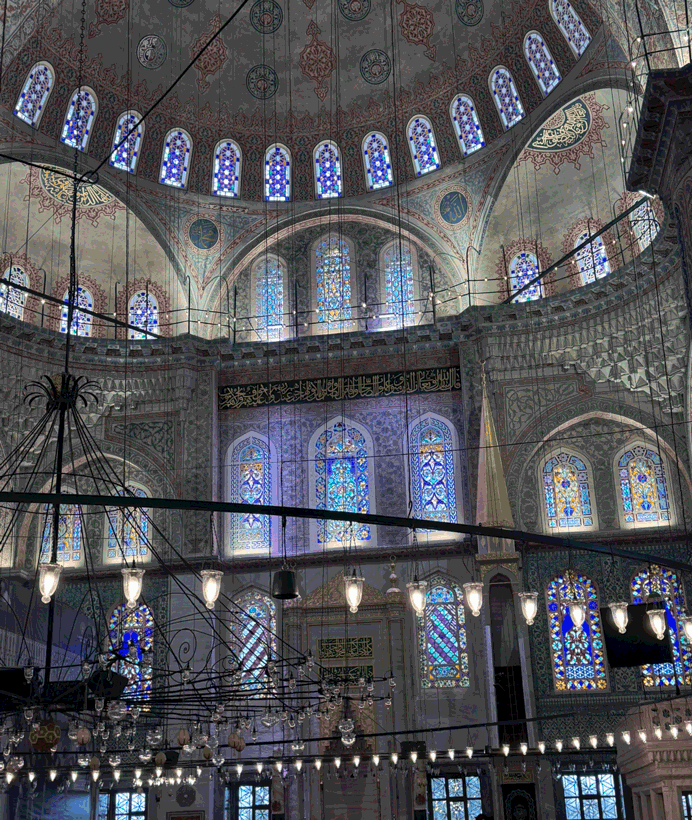
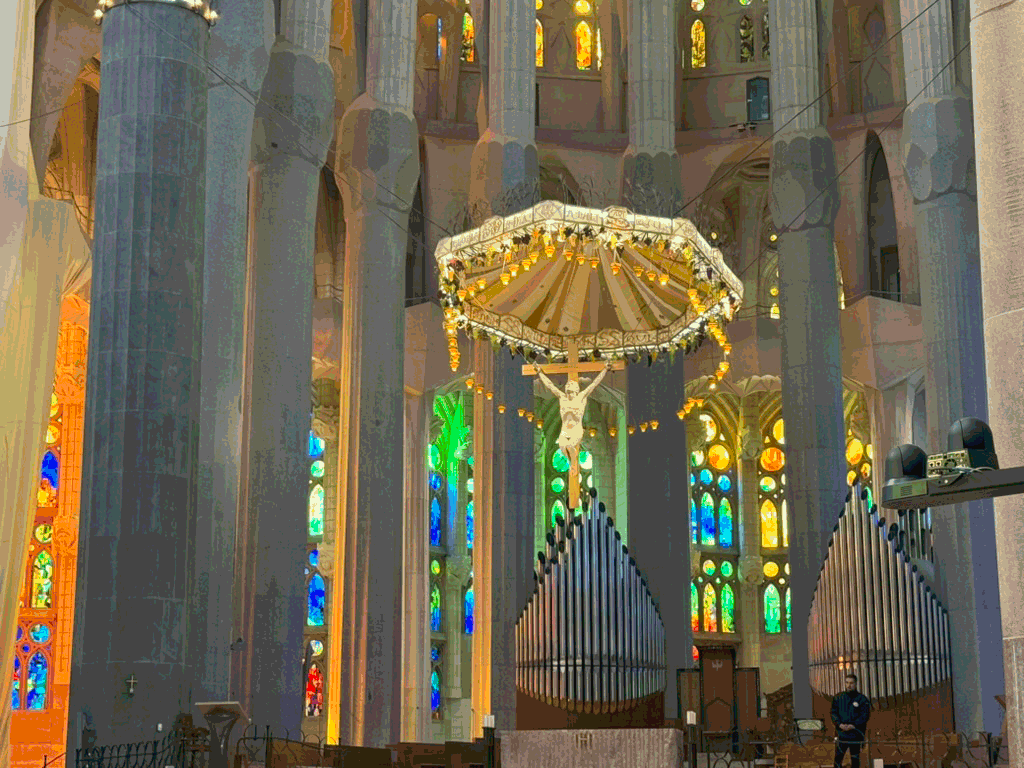
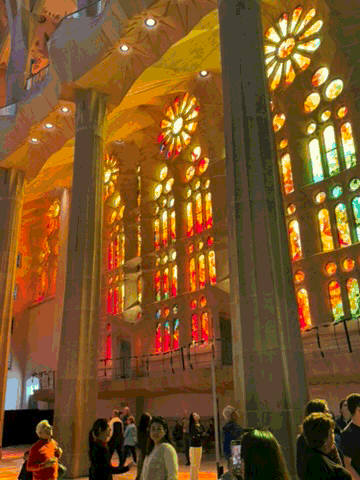
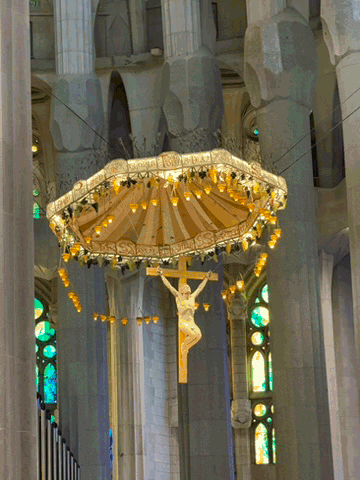
The three planned façades tell a story: the Nativity, the Passion, and the Glory of Christ. Before entering, take a few minutes with the figures on the Nativity and Passion façades. They are meant to be read, not just admired from a distance. Inside, the branching columns draw the eye upward, while sunlight through the stained glass changes the colour of the nave over the course of the day.
The papal visits
On 7 November 2010, Pope Benedict XVI dedicated the church and its altar for worship and designated it a minor basilica. His visit marked a turning point: this extraordinary building was formally set apart as a place for the Church’s liturgy, even as work on it continued.
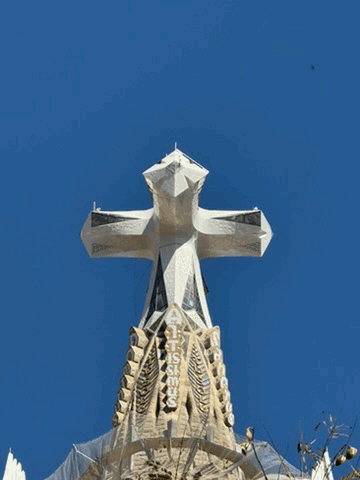
On 10 June 2026, exactly a century after Gaudí’s death, Pope Leo XIV celebrated Mass here. He visited Gaudí’s tomb in the crypt, then blessed the newly completed tower of Jesus Christ. In his homily, Leo described the façades as a path through Christ’s Nativity, Passion and glory. The Vatican’s recording of the Mass and tower inauguration is below.
If the video does not play in your browser, watch it on the official Vatican News channel.
Planning a visit as a pilgrim
The basilica’s worship page lists an international Mass on Sundays and holy days at 9 a.m. and a Saturday evening Mass at 8 p.m. Attendance is free, but space is limited; both use the Nativity façade entrance on Carrer de la Marina. Check the official page shortly before you go, as special events can change the schedule. The site also links to Masses in the crypt and arrangements for pilgrim groups.
A sightseeing visit uses a separate timed visitor ticket. If you want to understand the building rather than hurry through it, allow time for the façades, the nave and the museum. The basilica is still under construction, so a return visit may reveal something new. Its purpose, though, has stayed clear: Gaudí designed a church where the story of Christ could be encountered in stone, colour and worship.