The Latest News & Updates

  • Visiting Barcelona’s Sagrada Família: A Pilgrim’s Guide

    Visiting Barcelona’s Sagrada Família: A Pilgrim’s Guide

    Barcelona’s Sagrada Família draws visitors for its towers and coloured light. It is also a working Catholic basilica. For a pilgrim, the most useful way to visit is to give the building time: look at the Gospel scenes outside, step inside, and leave room for prayer as well as photographs.

    A church still being built

    Work began in 1882 under architect Francisco de Paula del Villar. Antoni Gaudí took over in 1883 and reshaped the project around the life of Christ. Construction continues today, more than a century after Gaudí’s death in 1926. The basilica’s official history is a useful guide to what was built in his lifetime and what later generations have completed.

    The three planned façades tell a story: the Nativity, the Passion, and the Glory of Christ. Before entering, take a few minutes with the figures on the Nativity and Passion façades. They are meant to be read, not just admired from a distance. Inside, the branching columns draw the eye upward, while sunlight through the stained glass changes the colour of the nave over the course of the day.
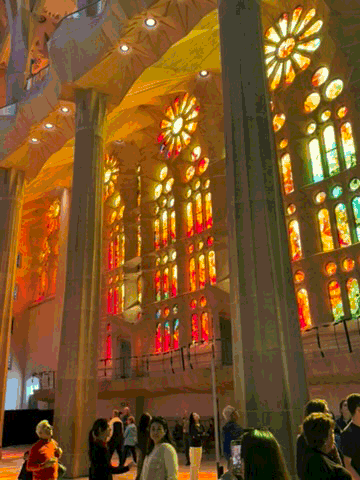
    Coloured stained-glass light filling the interior of the Sagrada Família
    The stained glass changes the light inside throughout the day.
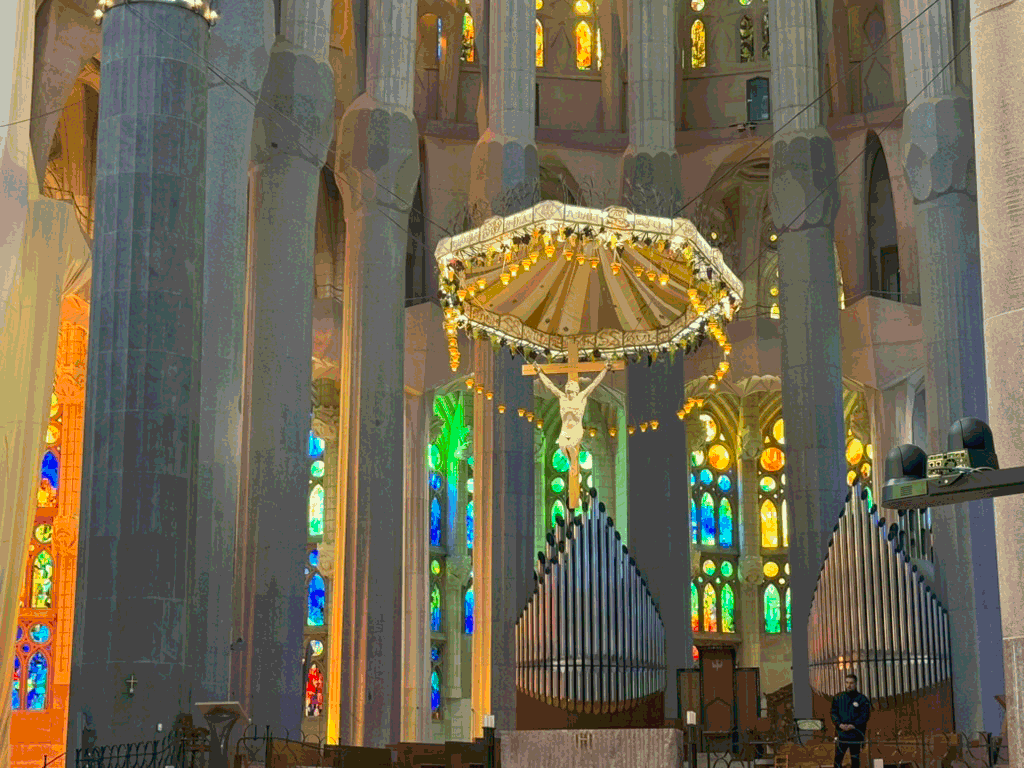
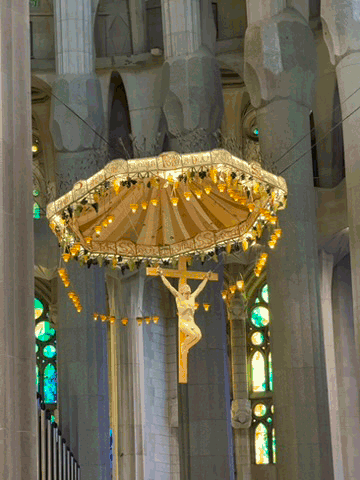
    Suspended crucifix over the altar inside the Sagrada Família
    The crucifix above the altar.

    The papal visits

    On 7 November 2010, Pope Benedict XVI dedicated the church and its altar for worship and designated it a minor basilica. His visit marked a turning point: this extraordinary building was formally set apart as a place for the Church’s liturgy, even as work on it continued.

    On 10 June 2026, exactly a century after Gaudí’s death, Pope Leo XIV celebrated Mass here. He visited Gaudí’s tomb in the crypt, then blessed the newly completed tower of Jesus Christ. In his homily, Leo described the façades as a path through Christ’s Nativity, Passion and glory. The Vatican’s recording of the Mass and tower inauguration is below.

    If the video does not play in your browser, watch it on the official Vatican News channel.
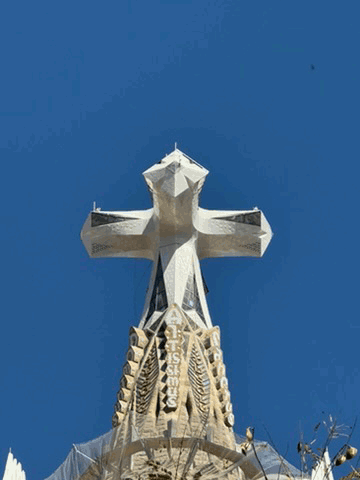
    Cross at the Sagrada Família set against a blue Barcelona sky
    The cross against the Barcelona sky.

    Planning a visit as a pilgrim

    The basilica’s worship page lists an international Mass on Sundays and holy days at 9 a.m. and a Saturday evening Mass at 8 p.m. Attendance is free, but space is limited; both use the Nativity façade entrance on Carrer de la Marina. Check the official page shortly before you go, as special events can change the schedule. The site also links to Masses in the crypt and arrangements for pilgrim groups.

    A sightseeing visit uses a separate timed visitor ticket. If you want to understand the building rather than hurry through it, allow time for the façades, the nave and the museum. The basilica is still under construction, so a return visit may reveal something new. Its purpose, though, has stayed clear: Gaudí designed a church where the story of Christ could be encountered in stone, colour and worship.
  • A Short Pilgrimage Through Istanbul: Hagia Sophia and Beyond

    A Short Pilgrimage Through Istanbul: Hagia Sophia and Beyond

    I had only a short time in Istanbul. I walked, looked up, and took more photographs than I expected. What stayed with me most was Hagia Sophia: a place I knew from history books, but whose Christian mosaics I had never seen with my own eyes. I left knowing I had barely started.

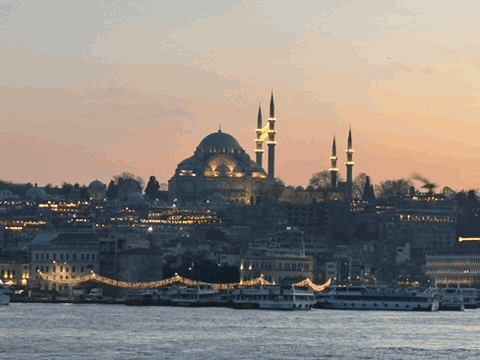
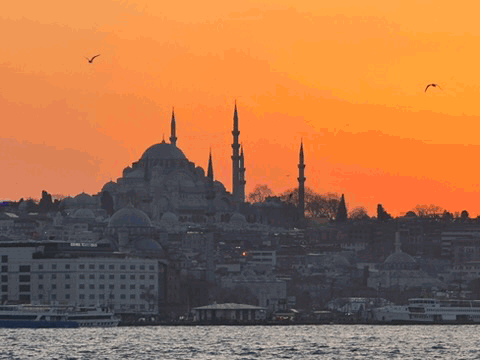
    Istanbul skyline and mosque minarets at orange sunset across the water
    The skyline at sunset.
    Istanbul domes and minarets across the water at dusk
    The city after the lights came on.

    Inside Hagia Sophia

    Hagia Sophia opened in 537 as the great church of Constantinople. After the Ottoman conquest in 1453 it became a mosque. It later served as a museum and reopened for Muslim worship in 2020. It is a mosque today, so I entered as a visitor with respect for the people who pray there. The building is also part of the UNESCO-listed historic areas of Istanbul.

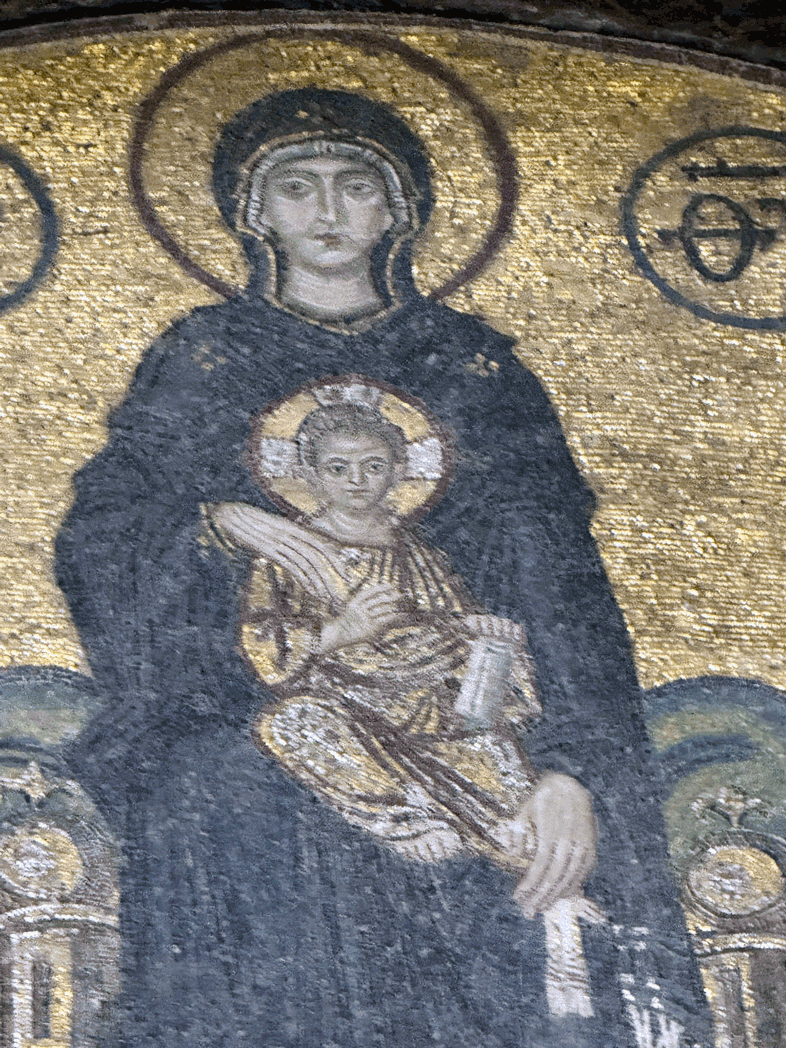
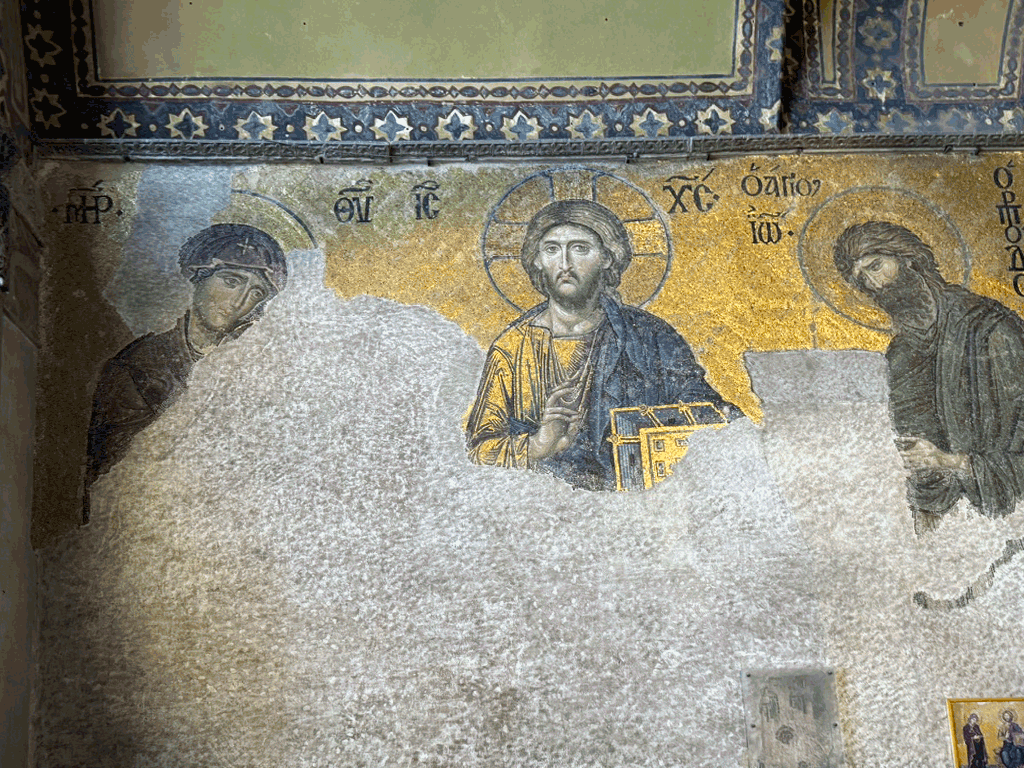
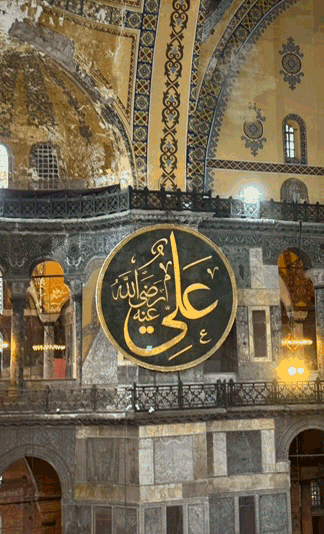
    I kept looking up. One mosaic shows Mary holding the Christ Child. Another, often called the Deësis, shows Christ between Mary and John the Baptist. I could see the worn places where parts of the image have been lost. Nearby are the large round panels of Arabic calligraphy added during the building’s life as a mosque. Those details say more about Istanbul’s long religious history than any quick photograph of the dome could.

    Mosaic of Mary holding the Christ Child in Hagia Sophia
    Mary and the Christ Child in Hagia Sophia.
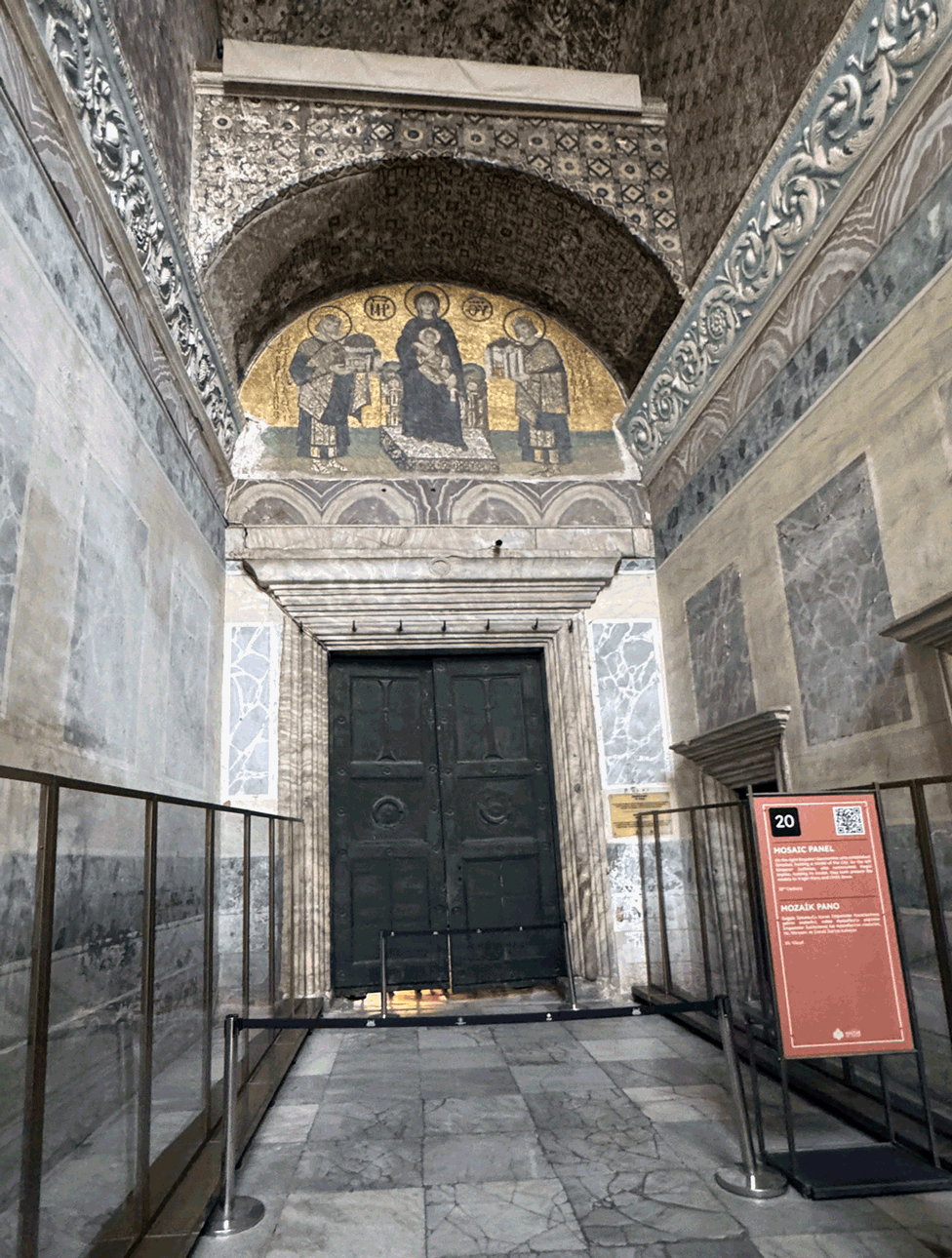
    Mosaic above a doorway inside Hagia Sophia showing Mary and the Christ Child with two figures
    A mosaic above a doorway.
    Deësis mosaic in Hagia Sophia showing Christ between Mary and John the Baptist
    Christ, with Mary and John the Baptist, in the Deësis mosaic.
    Large Arabic calligraphy roundel inside Hagia Sophia
    One of the great calligraphy panels.
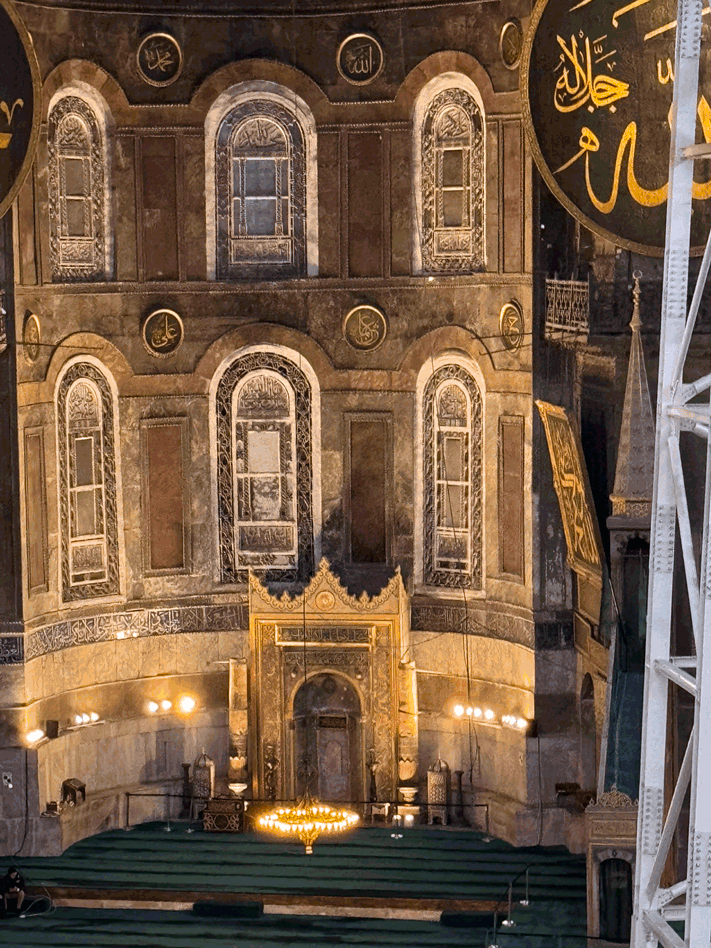
    Interior of Hagia Sophia with an Islamic calligraphy roundel and prayer area
    Hagia Sophia is an active mosque today.

    Why Constantinople matters to a Christian

    Istanbul was Constantinople, the capital of the Eastern Roman Empire and home of a church whose influence reached far beyond this city. If you say the Nicene Creed at Mass, part of its story belongs here. The creed began at Nicaea in 325 and was completed at the Council of Constantinople in 381. The Vatican’s account of the councils explains that history. Standing among the mosaics gave those dates a place in my mind.

    The city’s Christian life did not end with the Byzantine Empire. The Ecumenical Patriarchate is still based here, and Istanbul has Catholic parishes too. On a longer visit I would make time for the Patriarchal Church of Saint George, the Catholic Cathedral of the Holy Spirit, and Saint Anthony of Padua. These are living places of prayer; check their own pages before going for Mass or a visit.

    Pope Leo came that November

    Around the time of my trip, Pope Leo XIV visited Türkiye in November 2025 on the first apostolic journey of his pontificate. In Istanbul he met Catholics at the Cathedral of the Holy Spirit, prayed with Ecumenical Patriarch Bartholomew at Saint George, and celebrated Mass. He also went to İznik, the ancient Nicaea, for the 1,700th anniversary of the first council. His visit brought the ancient councils and today’s Christian communities into the same conversation.

    A little of the city beyond it

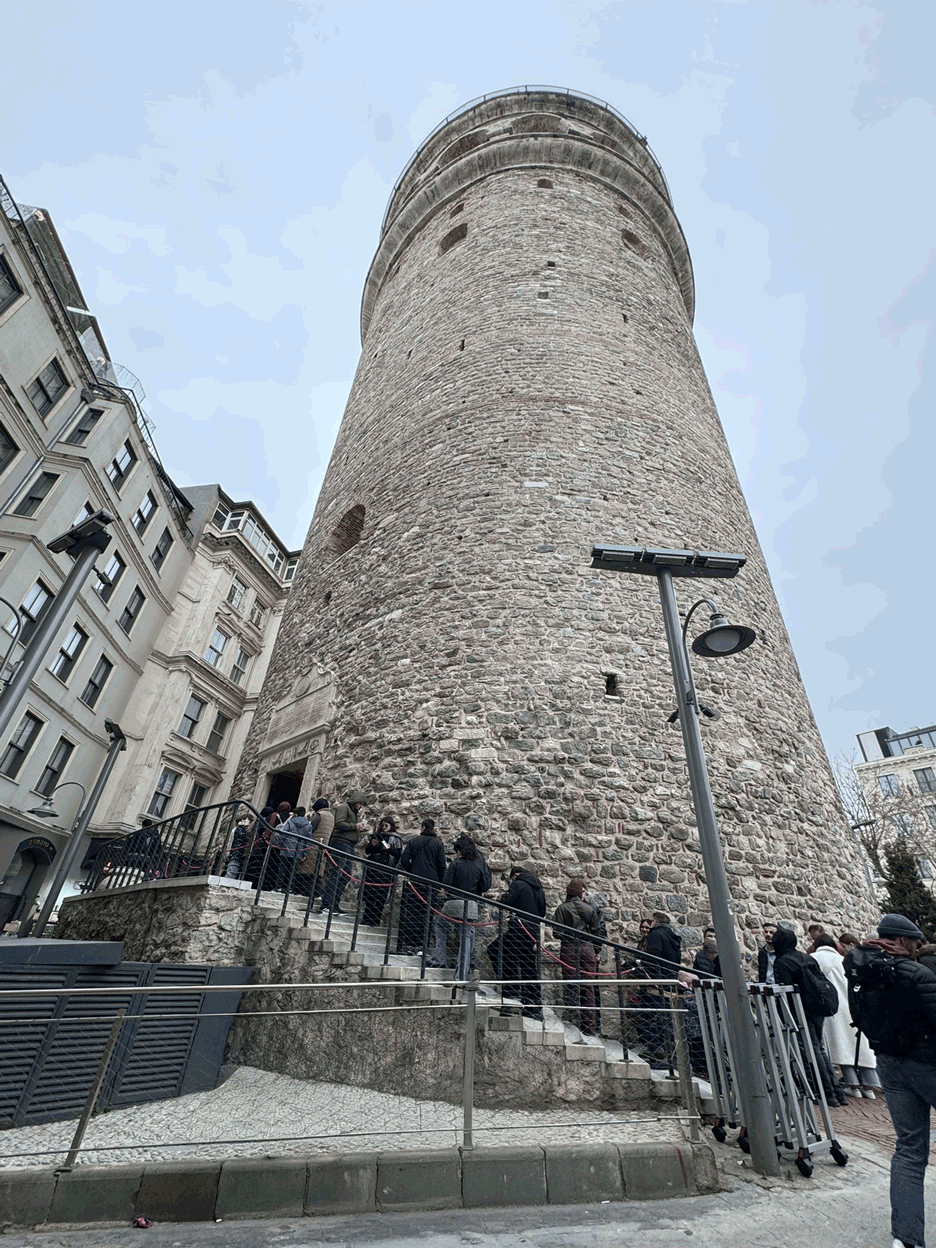
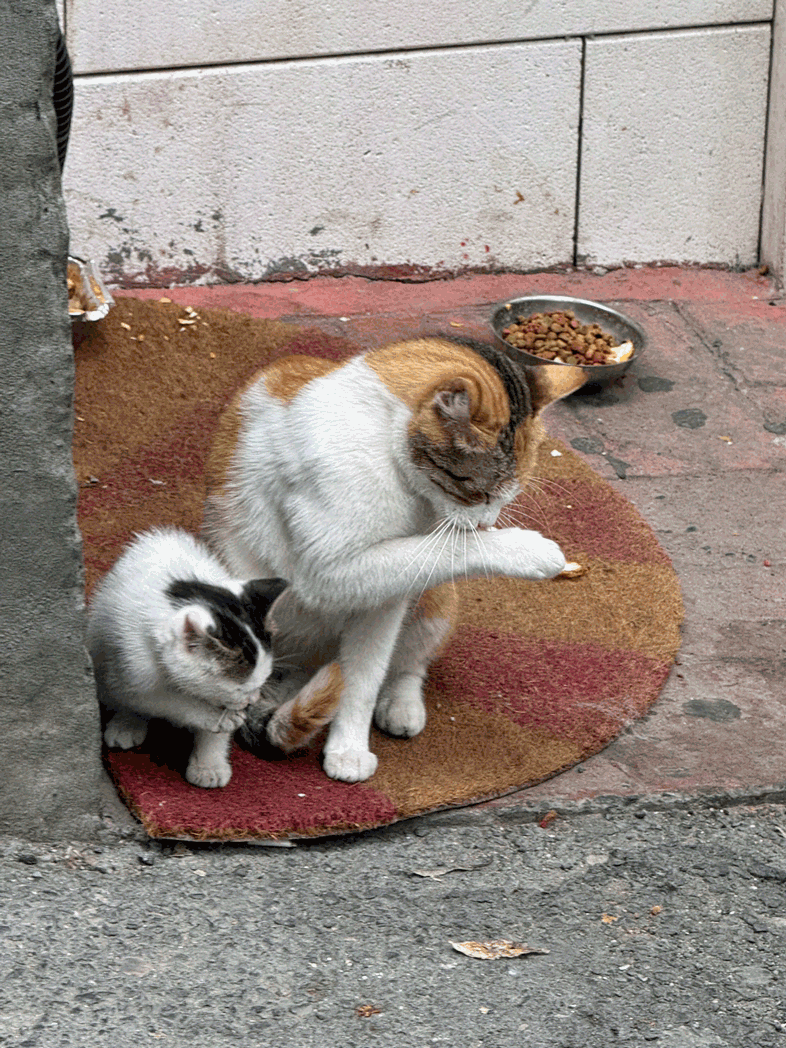
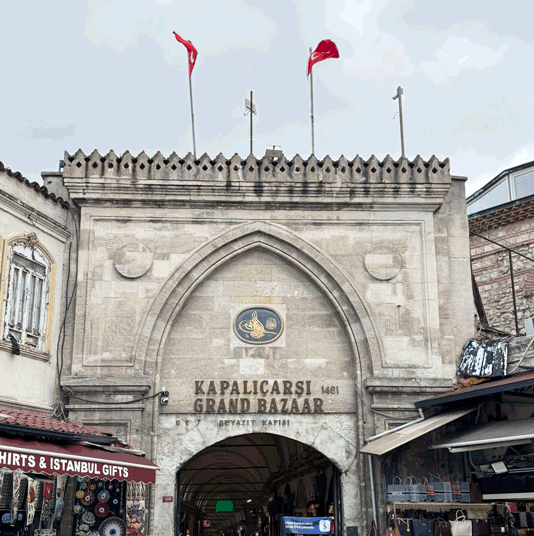
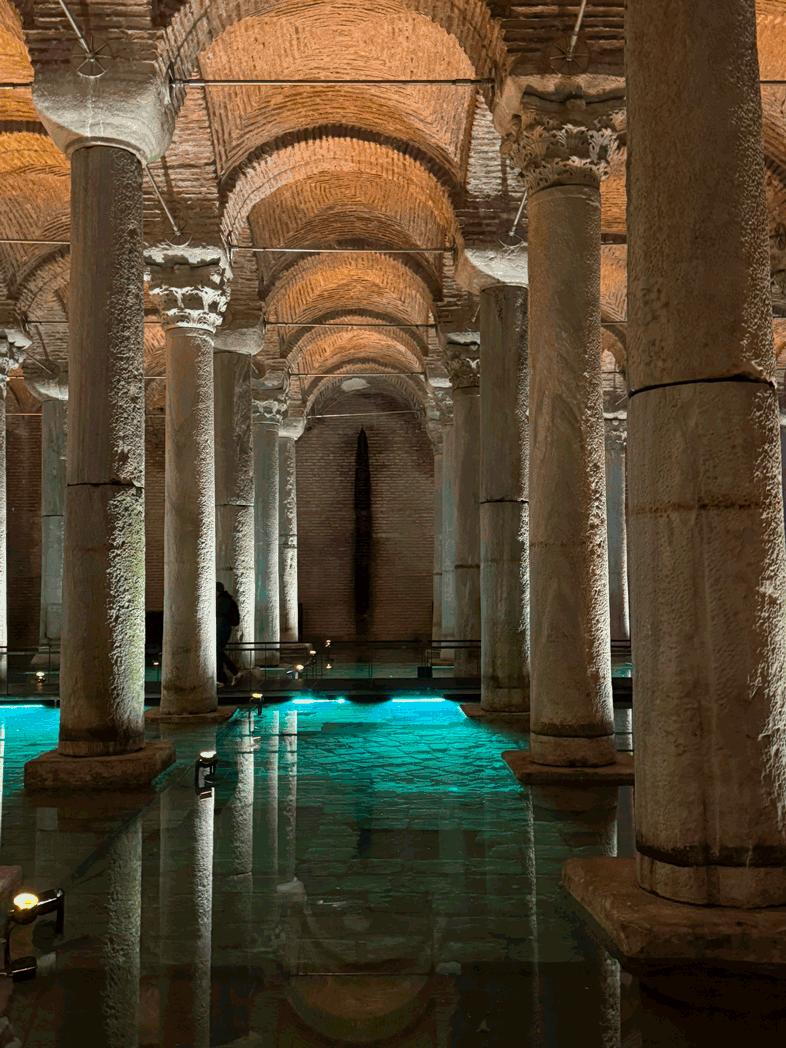
    A short tour also leaves room for ordinary Istanbul. I photographed Galata Tower, a cat with her kitten, and the Grand Bazaar entrance. Near Hagia Sophia, the Basilica Cistern takes you below the streets into the city’s Roman past. None of these was the reason I came as a pilgrim, but they helped me see the city as more than a collection of monuments.

    Galata Tower seen from the street in Istanbul
    Galata Tower.
    Cat and kitten on an Istanbul sidewalk
    A pause along the way.
    Entrance to Istanbul Grand Bazaar
    The Grand Bazaar entrance.
    Rows of columns reflected in the water of Istanbul Basilica Cistern
    The Basilica Cistern beneath the city.

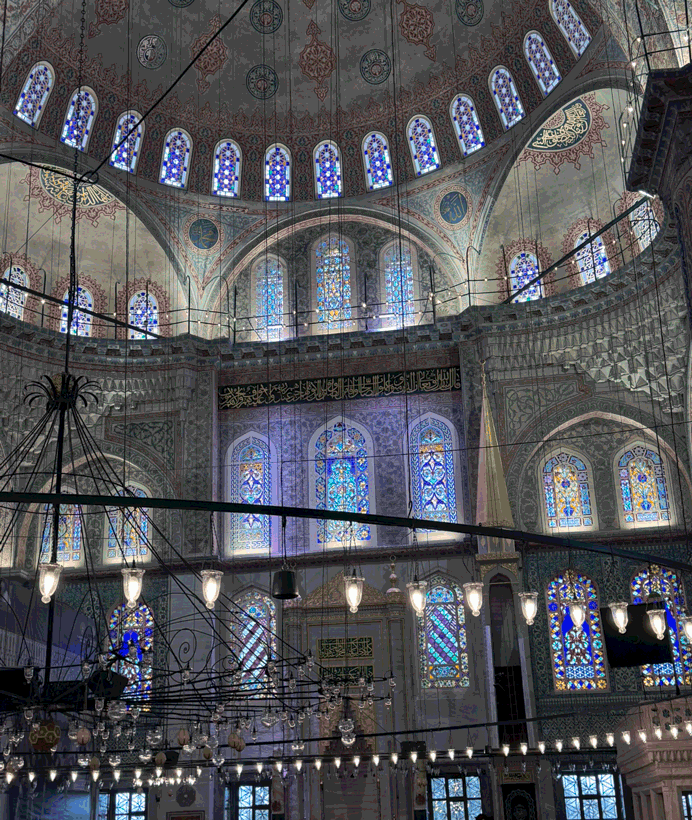
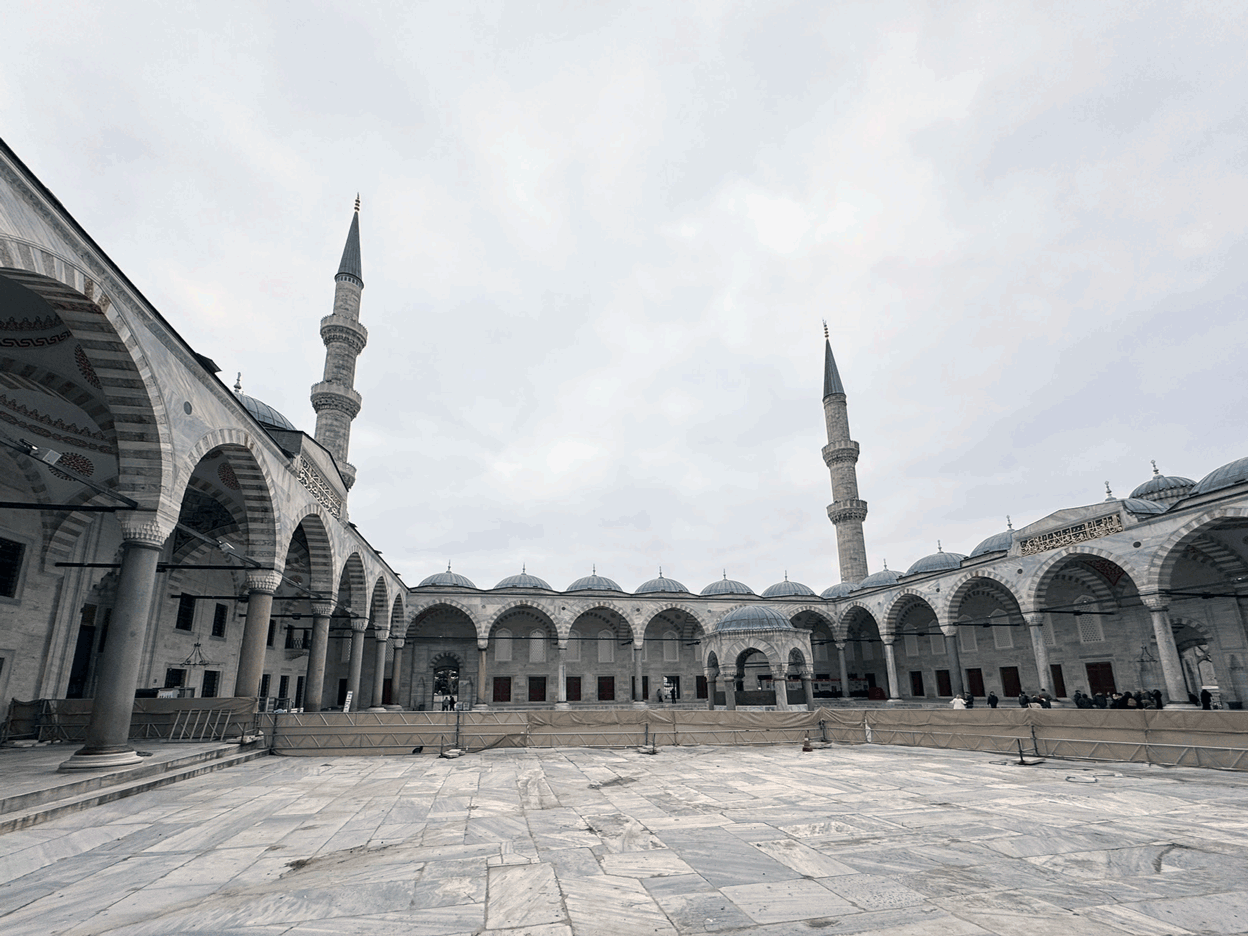
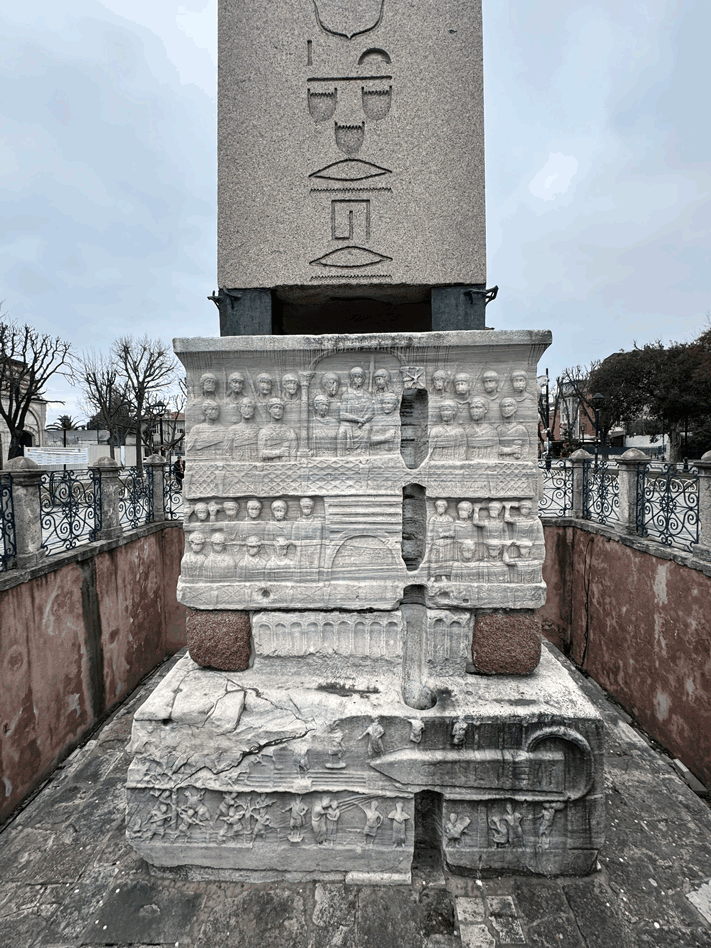
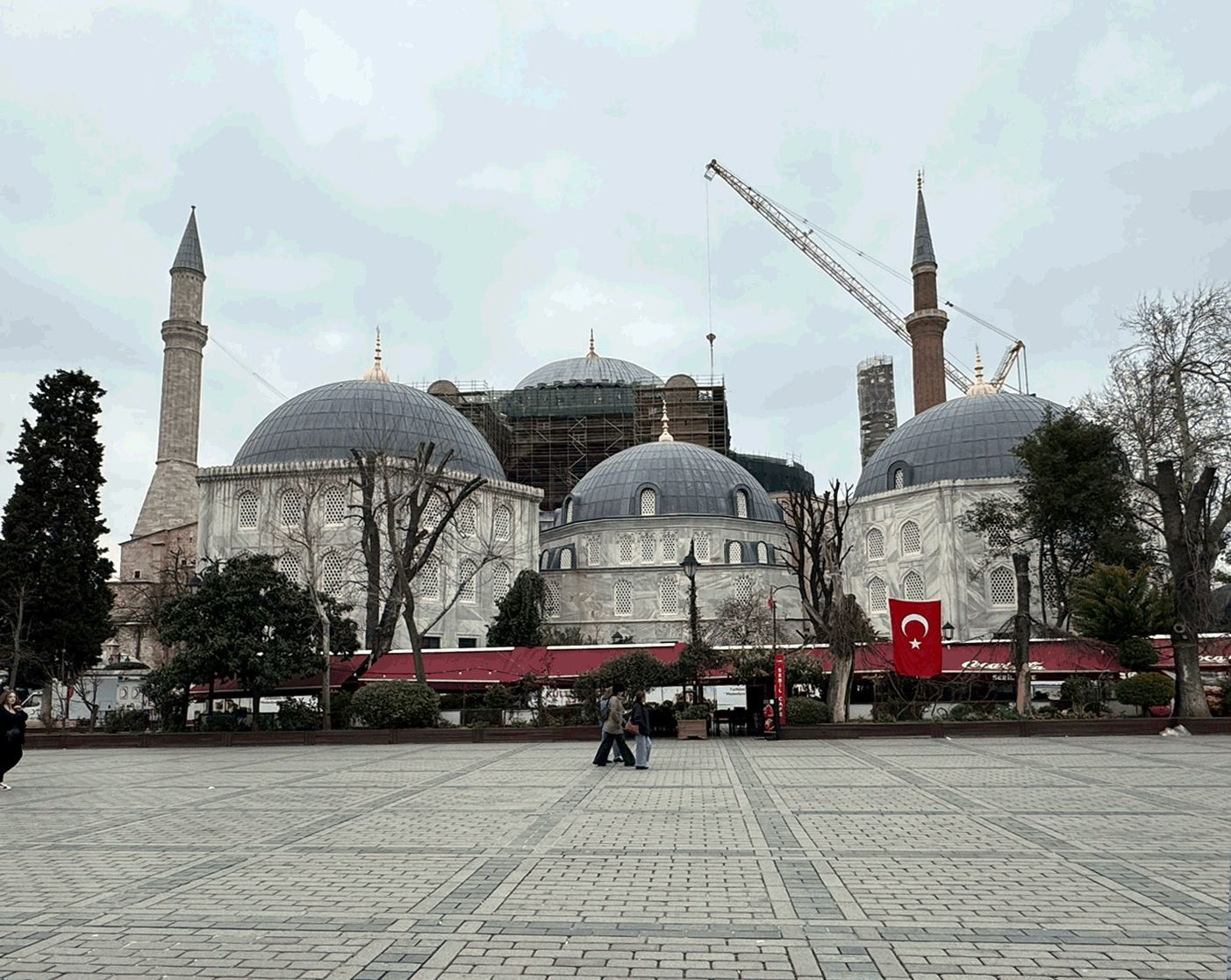
    Across Sultanahmet Square, I also photographed the Sultan Ahmed Mosque, often called the Blue Mosque, and its courtyard. It is another active house of worship. The ancient obelisk nearby stands in what was once Constantinople’s Hippodrome. In a few minutes’ walk you pass Roman, Byzantine and Ottoman history, while people around you are simply going about their day.

    Blue stained-glass windows and decorated dome inside Sultan Ahmed Mosque
    Inside the Blue Mosque.
    Courtyard and arcades of Sultan Ahmed Mosque in Istanbul
    The mosque courtyard.
    Base of the ancient Egyptian obelisk in Istanbul historic Hippodrome
    At the old Hippodrome.

    I would go back with more time. I would visit the churches I missed and leave room to pray with the Christians who live here now. This brief visit gave me a start: a face of Christ in a mosaic, a city still at prayer, and a much longer list for next time.

  • A Pilgrim’s Guide to the Basilica of Our Lady of Guadalupe in Mexico City

    A Pilgrim’s Guide to the Basilica of Our Lady of Guadalupe in Mexico City

    If you are going to the Basilica of Our Lady of Guadalupe, leave yourself more time than you think you need. You may come for Mass and the image of Our Lady, but the plaza, the older churches and Tepeyac Hill are worth time too.

    There is no need to see it all in a hurry.

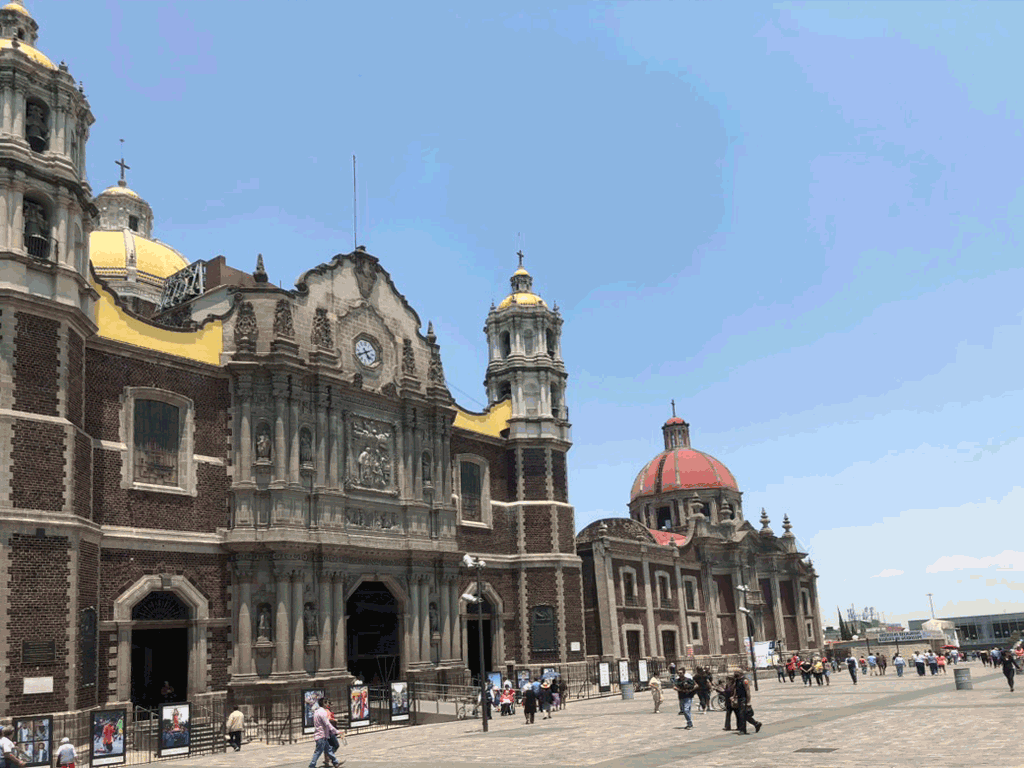
    Historic churches and pilgrims around the Basilica of Guadalupe plaza in Mexico City
    The older churches beside the plaza.

    Start in the plaza

    The old Basilica is still here, though today it is called the Expiatory Temple of Christ the King. Nearby is the round new Basilica, completed in 1976 when the earlier church could no longer hold the crowds. From the plaza you can see both.

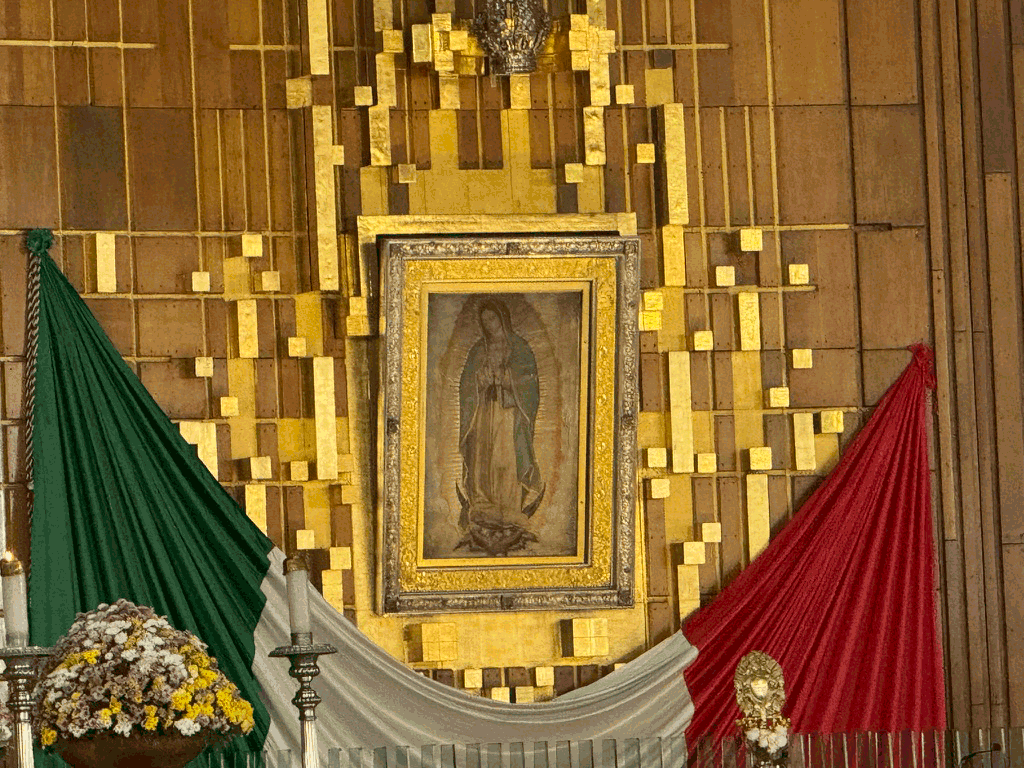
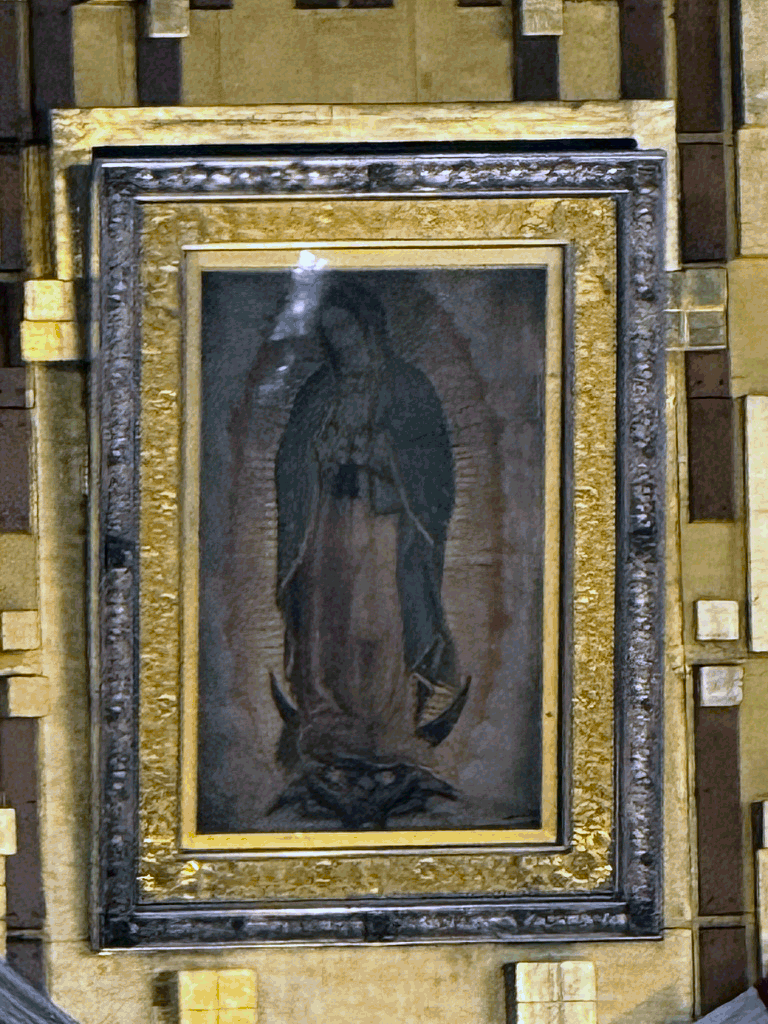
    Inside the new church, look toward the altar: the image of Our Lady of Guadalupe is visible even from the back.

    The image above the altar

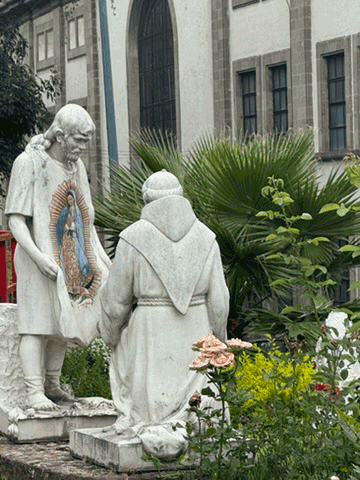
    This is why people come to Tepeyac. According to Catholic tradition, Our Lady appeared to St. Juan Diego at this very place in December 1531 and asked for a church to be built. Juan Diego took roses from the hill to the bishop inside his tilma.

    When he opened the cloak, the Lady’s image was on it. The image you see above the altar is the same one pilgrims have come to pray before for centuries.

    If you can, before you go to Mass try the moving walkway beneath the image. You will have only a brief moment as it carries you past the image to truly take in it’s beauty.

    Afterward, find a seat in the church. You can stay, pray for someone by name, or simply sit quietly for a few minutes and attend Mass if you wish.

    Stone sculpture of Juan Diego showing the image of Our Lady of Guadalupe on his tilma
    Juan Diego opens his tilma in a sculpture on the Basilica grounds.
    Close view of the framed image of Our Lady of Guadalupe inside the Basilica
    The image above the Basilica’s altar.

    Stay a while

    Once you have been inside, walk back through the grounds. Visit the old Basilica and the chapels if they are open. If you have the time and energy, go up toward Tepeyac Hill, the place associated with Mary’s meeting with Juan Diego.

    Our Lady of Guadalupe, I bring you the people I love and the things I cannot put right on my own. Pray for us, and lead us to your Son.

    Before you go

    The Basilica is in the north of Mexico City at Fray Juan de Zumárraga No. 2, Villa Gustavo A. Madero. Its posted opening hours are 6:00 a.m. to 9:00 p.m. daily. Check the official Mass schedule before you leave; times may change, especially around the December 12 feast.

    The Basilica’s directions page lists La Villa-Basílica on Metro Line 6 and Deportivo 18 de Marzo on Line 3 as nearby stations. Bring water if you plan to walk the grounds.

    For notices and contact information, use the official Basilica website.

    Watch Mass from the Basilica

    Can’t be there in person? The Basilica carries a live video feed. The stream shown there on October 4, 2026 is below. If it has ended, the Basilica’s website has the current video and Mass times. You can also visit its YouTube channel. Times are local to Mexico City.

  • Daily Catholic Reflection – October 4, 2026

    Please visit CatholicMasses.org for today’s reflection and daily Mass.

  • Daily Catholic News – October 4, 2026

    Today's Catholic Highlights:

    Please visit CatholicMasses.org for the latest news and updates from the Catholic Church.

    Last updated on October 4, 2026 at 5:27 AM

  • Daily Catholic Reflection – October 3, 2026

    Please visit CatholicMasses.org for today’s reflection and daily Mass.

  • Daily Catholic News – October 3, 2026

    Daily Catholic News:

    Please visit CatholicMasses.org for the latest news and updates from the Catholic Church.

    Last updated on October 3, 2026 at 4:43 AM

  • Daily Catholic Reflection – October 2, 2026

    Please visit CatholicMasses.org for today’s reflection and daily Mass.

  • Daily Catholic News – October 2, 2026

    Daily Catholic News:

    Please visit CatholicMasses.org for the latest news and updates from the Catholic Church.

    Last updated on October 2, 2026 at 4:37 AM

  • Daily Catholic Reflection – October 1, 2026

    Please visit CatholicMasses.org for today’s reflection and daily Mass.