Category: Faith

  • Saint Francis of Assisi: Gospel, Peace, and Creation 800 Years On

    Saint Francis of Assisi: Gospel, Peace, and Creation 800 Years On

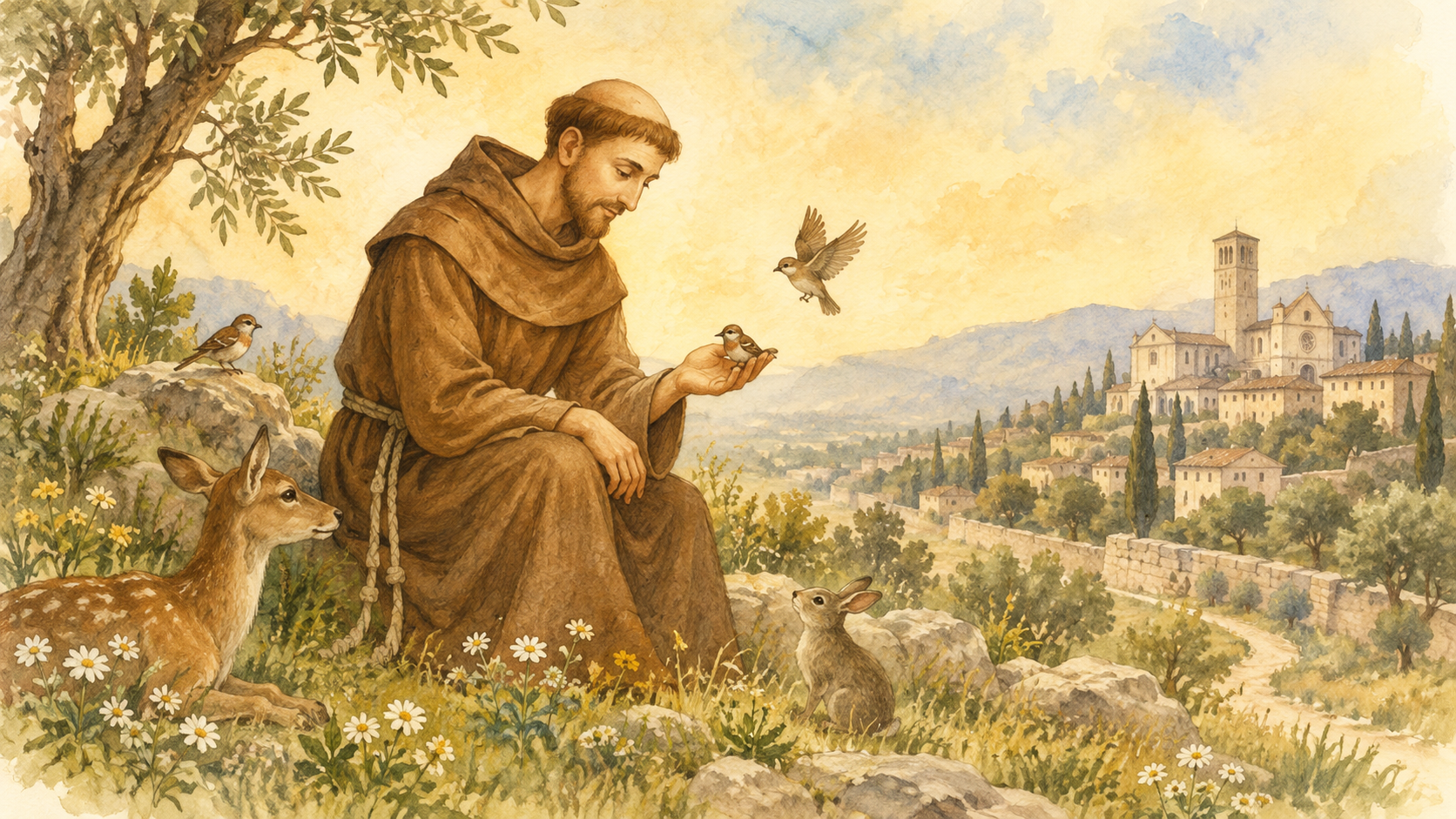
    The Church celebrates Saint Francis of Assisi on October 4. In 2026, the feast also falls in the 800th year since his death. Francis is loved for his gentleness toward animals, but his life began with a more demanding question: how could he follow Jesus Christ with nothing held back?

    The Gospel came first

    Francis grew up in a prosperous merchant family in Assisi. His change of heart was gradual. Prayer, the neglected church of San Damiano, and an encounter with a person suffering from leprosy drew him away from the life he had expected. He chose to live among the poor and to preach repentance, peace, and the love of God. The Franciscan Rule still begins with the heart of his vocation: living the Gospel of Jesus Christ.

    That matters when Francis is remembered only as a kindly figure in a garden. He did not look away from people whom his society avoided. Poverty, for him, was a way to be free to serve and to depend on God; it was never a reason to ignore someone else’s hunger or suffering. A Franciscan reading of his feast begins with that concrete love of neighbor.

    Peace, praise, and the created world

    Francis called others to peace, but he also knew that peace asks something of the person offering it: patience, humility, and a willingness to meet someone face to face. His care for animals belongs within the same Gospel vision. Creatures were not props in a charming story. They shared a world given by God, and Francis saw in them a reason to give thanks.

    Near the end of his life, while seriously ill, Francis composed the Canticle of the Creatures. He praised God through sun, moon, wind, water, fire, and the earth that sustains us. The song did not come from an easy life. It came from someone who could still recognize gifts around him in pain. That is why the Franciscan concern for creation also includes concern for the people most exposed to its harm. Pope Francis made that connection in Laudato Si’.

    Keeping the feast

    Francis died on October 3, 1226; the Church keeps his feast the following day. Franciscans call his passing the Transitus. On this 800th anniversary, a simple way to honor him is to pray, make peace where it is needed, help someone who has been overlooked, and treat the living world with care. Many churches also offer a blessing of animals around his feast.

    For those grateful for an animal companion, Catholic Masses offers a Saint Francis–inspired pet enrollment card with a prayerful message. It can be a small way to remember a beloved pet and the joy of caring for God’s creatures.

    Saint Francis of Assisi: Saint of the Day

    Watch our Saint Francis of Assisi Saint of the Day video on YouTube.

    For more on his life and this year’s anniversary, see Franciscan Media’s life of Saint Francis and the Order of Friars Minor’s 2026 reflection.

  • Visiting Barcelona’s Sagrada Família: A Pilgrim’s Guide

    Visiting Barcelona’s Sagrada Família: A Pilgrim’s Guide

    Barcelona’s Sagrada Família draws visitors for its towers and coloured light. It is also a working Catholic basilica. For a pilgrim, the most useful way to visit is to give the building time: look at the Gospel scenes outside, step inside, and leave room for prayer as well as photographs.

    A church still being built

    Work began in 1882 under architect Francisco de Paula del Villar. Antoni Gaudí took over in 1883 and reshaped the project around the life of Christ. Construction continues today, more than a century after Gaudí’s death in 1926. The basilica’s official history is a useful guide to what was built in his lifetime and what later generations have completed.

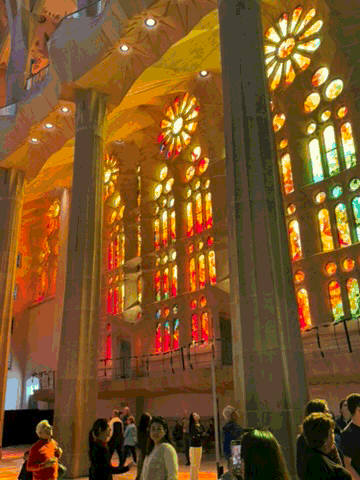
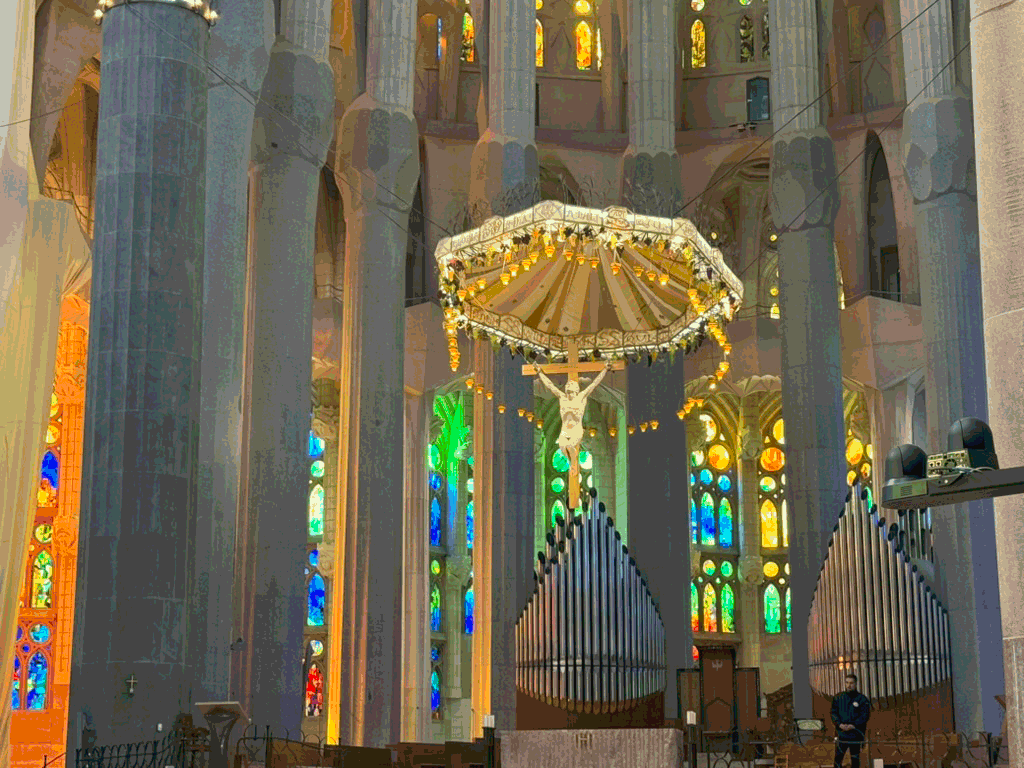
    The three planned façades tell a story: the Nativity, the Passion, and the Glory of Christ. Before entering, take a few minutes with the figures on the Nativity and Passion façades. They are meant to be read, not just admired from a distance. Inside, the branching columns draw the eye upward, while sunlight through the stained glass changes the colour of the nave over the course of the day.

    Coloured stained-glass light filling the interior of the Sagrada Família
    The stained glass changes the light inside throughout the day.
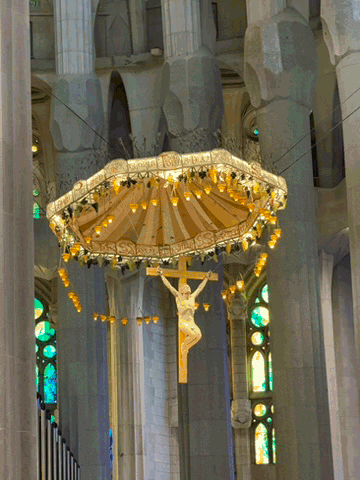
    Suspended crucifix over the altar inside the Sagrada Família
    The crucifix above the altar.

    The papal visits

    On 7 November 2010, Pope Benedict XVI dedicated the church and its altar for worship and designated it a minor basilica. His visit marked a turning point: this extraordinary building was formally set apart as a place for the Church’s liturgy, even as work on it continued.

    On 10 June 2026, exactly a century after Gaudí’s death, Pope Leo XIV celebrated Mass here. He visited Gaudí’s tomb in the crypt, then blessed the newly completed tower of Jesus Christ. In his homily, Leo described the façades as a path through Christ’s Nativity, Passion and glory. The Vatican’s recording of the Mass and tower inauguration is below.

    If the video does not play in your browser, watch it on the official Vatican News channel.

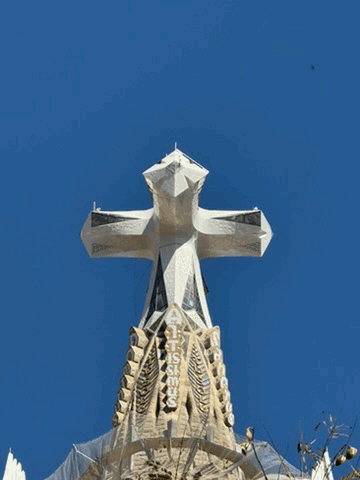
    Cross at the Sagrada Família set against a blue Barcelona sky
    The cross against the Barcelona sky.

    Planning a visit as a pilgrim

    The basilica’s worship page lists an international Mass on Sundays and holy days at 9 a.m. and a Saturday evening Mass at 8 p.m. Attendance is free, but space is limited; both use the Nativity façade entrance on Carrer de la Marina. Check the official page shortly before you go, as special events can change the schedule. The site also links to Masses in the crypt and arrangements for pilgrim groups.

    A sightseeing visit uses a separate timed visitor ticket. If you want to understand the building rather than hurry through it, allow time for the façades, the nave and the museum. The basilica is still under construction, so a return visit may reveal something new. Its purpose, though, has stayed clear: Gaudí designed a church where the story of Christ could be encountered in stone, colour and worship.

  • A Short Pilgrimage Through Istanbul: Hagia Sophia and Beyond

    A Short Pilgrimage Through Istanbul: Hagia Sophia and Beyond

    I had only a short time in Istanbul. I walked, looked up, and took more photographs than I expected. What stayed with me most was Hagia Sophia: a place I knew from history books, but whose Christian mosaics I had never seen with my own eyes. I left knowing I had barely started.

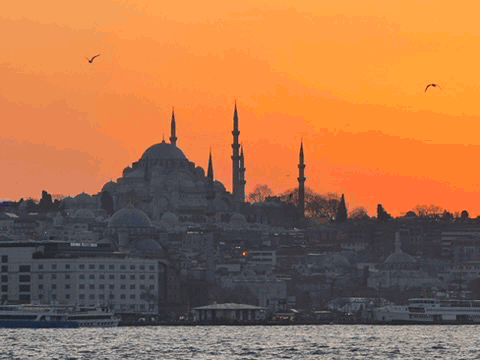
    Istanbul skyline and mosque minarets at orange sunset across the water
    The skyline at sunset.
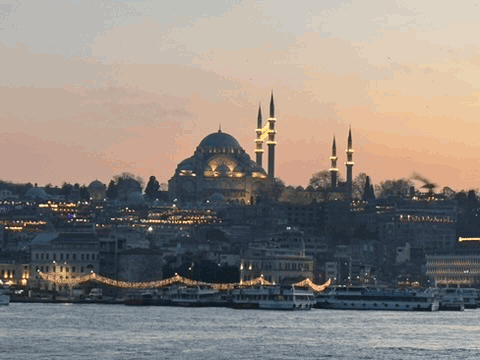
    Istanbul domes and minarets across the water at dusk
    The city after the lights came on.

    Inside Hagia Sophia

    Hagia Sophia opened in 537 as the great church of Constantinople. After the Ottoman conquest in 1453 it became a mosque. It later served as a museum and reopened for Muslim worship in 2020. It is a mosque today, so I entered as a visitor with respect for the people who pray there. The building is also part of the UNESCO-listed historic areas of Istanbul.

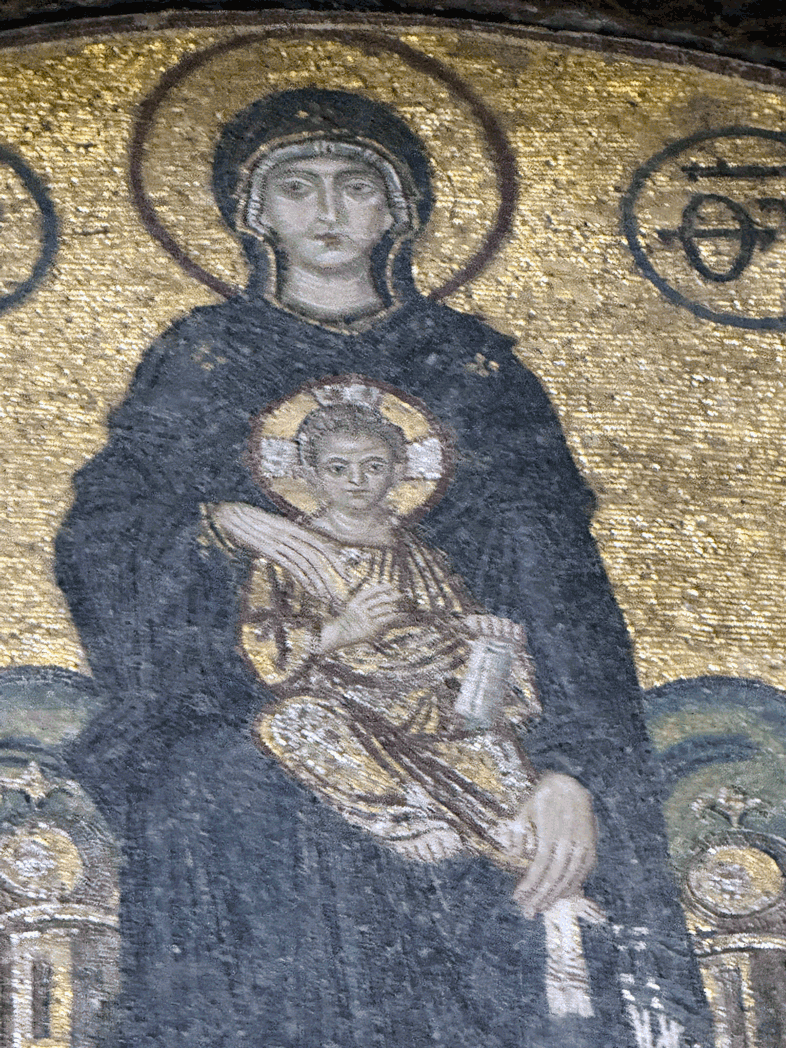
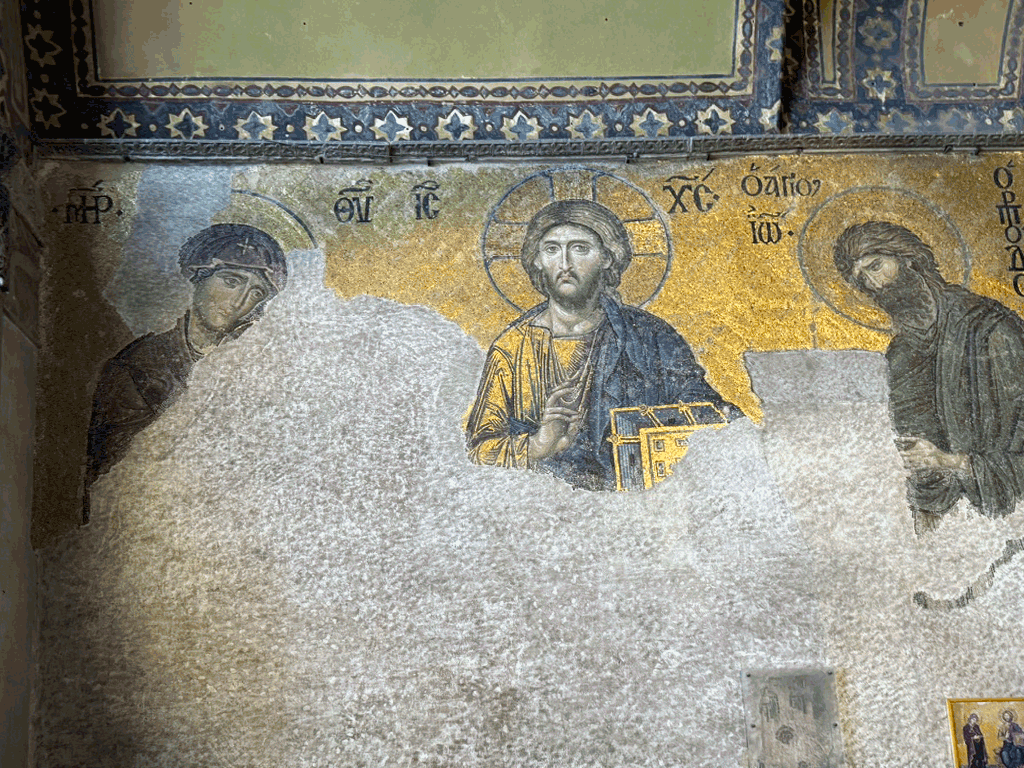
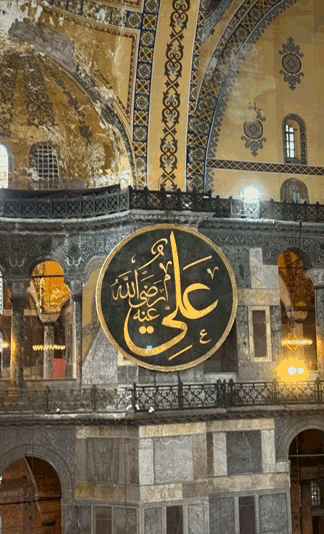
    I kept looking up. One mosaic shows Mary holding the Christ Child. Another, often called the Deësis, shows Christ between Mary and John the Baptist. I could see the worn places where parts of the image have been lost. Nearby are the large round panels of Arabic calligraphy added during the building’s life as a mosque. Those details say more about Istanbul’s long religious history than any quick photograph of the dome could.

    Mosaic of Mary holding the Christ Child in Hagia Sophia
    Mary and the Christ Child in Hagia Sophia.
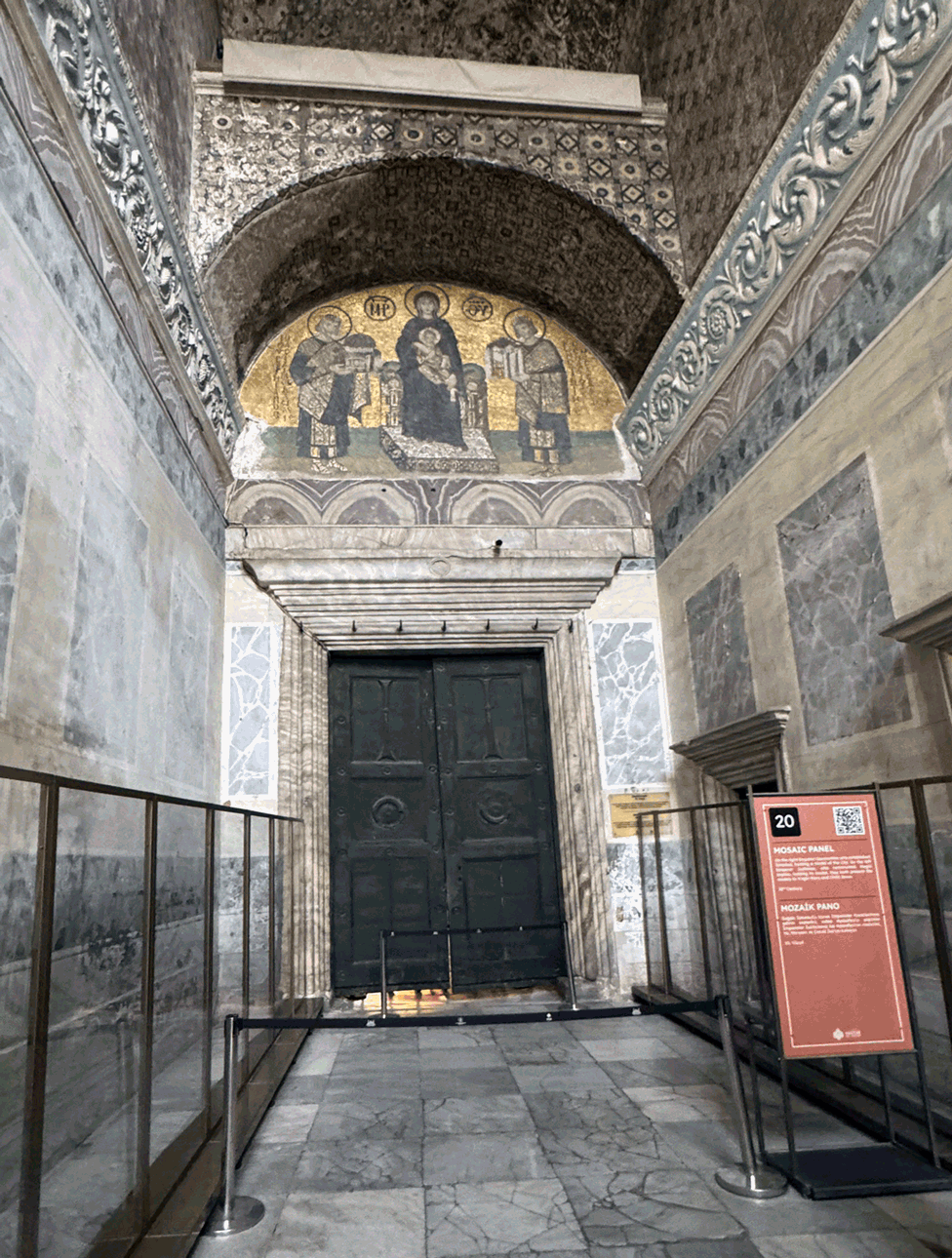
    Mosaic above a doorway inside Hagia Sophia showing Mary and the Christ Child with two figures
    A mosaic above a doorway.
    Deësis mosaic in Hagia Sophia showing Christ between Mary and John the Baptist
    Christ, with Mary and John the Baptist, in the Deësis mosaic.
    Large Arabic calligraphy roundel inside Hagia Sophia
    One of the great calligraphy panels.
    Interior of Hagia Sophia with an Islamic calligraphy roundel and prayer area
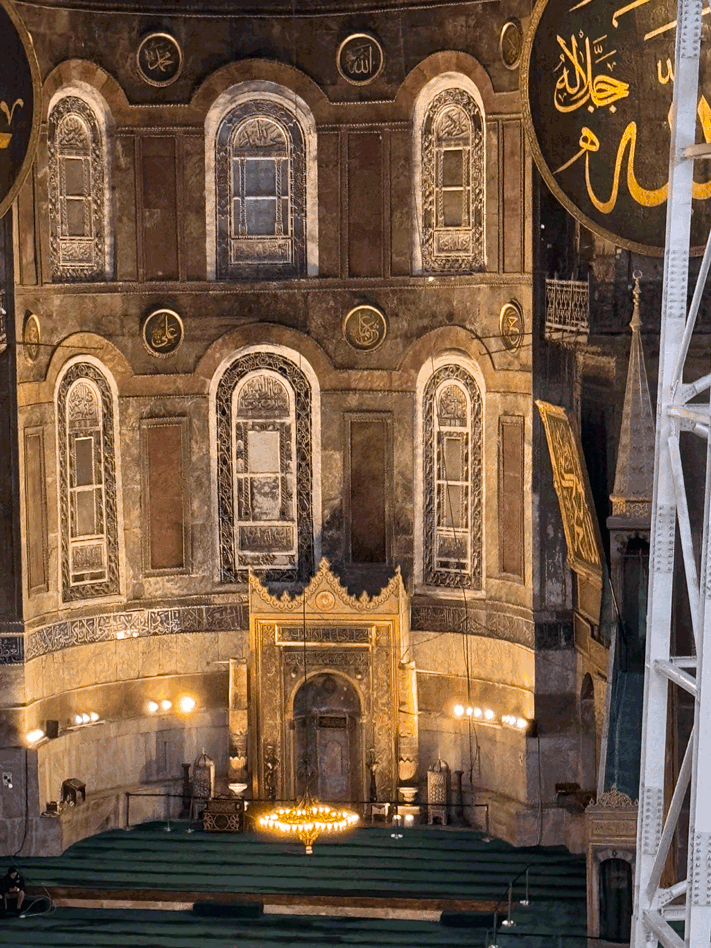
    Hagia Sophia is an active mosque today.

    Why Constantinople matters to a Christian

    Istanbul was Constantinople, the capital of the Eastern Roman Empire and home of a church whose influence reached far beyond this city. If you say the Nicene Creed at Mass, part of its story belongs here. The creed began at Nicaea in 325 and was completed at the Council of Constantinople in 381. The Vatican’s account of the councils explains that history. Standing among the mosaics gave those dates a place in my mind.

    The city’s Christian life did not end with the Byzantine Empire. The Ecumenical Patriarchate is still based here, and Istanbul has Catholic parishes too. On a longer visit I would make time for the Patriarchal Church of Saint George, the Catholic Cathedral of the Holy Spirit, and Saint Anthony of Padua. These are living places of prayer; check their own pages before going for Mass or a visit.

    Pope Leo came that November

    Around the time of my trip, Pope Leo XIV visited Türkiye in November 2025 on the first apostolic journey of his pontificate. In Istanbul he met Catholics at the Cathedral of the Holy Spirit, prayed with Ecumenical Patriarch Bartholomew at Saint George, and celebrated Mass. He also went to İznik, the ancient Nicaea, for the 1,700th anniversary of the first council. His visit brought the ancient councils and today’s Christian communities into the same conversation.

    A little of the city beyond it

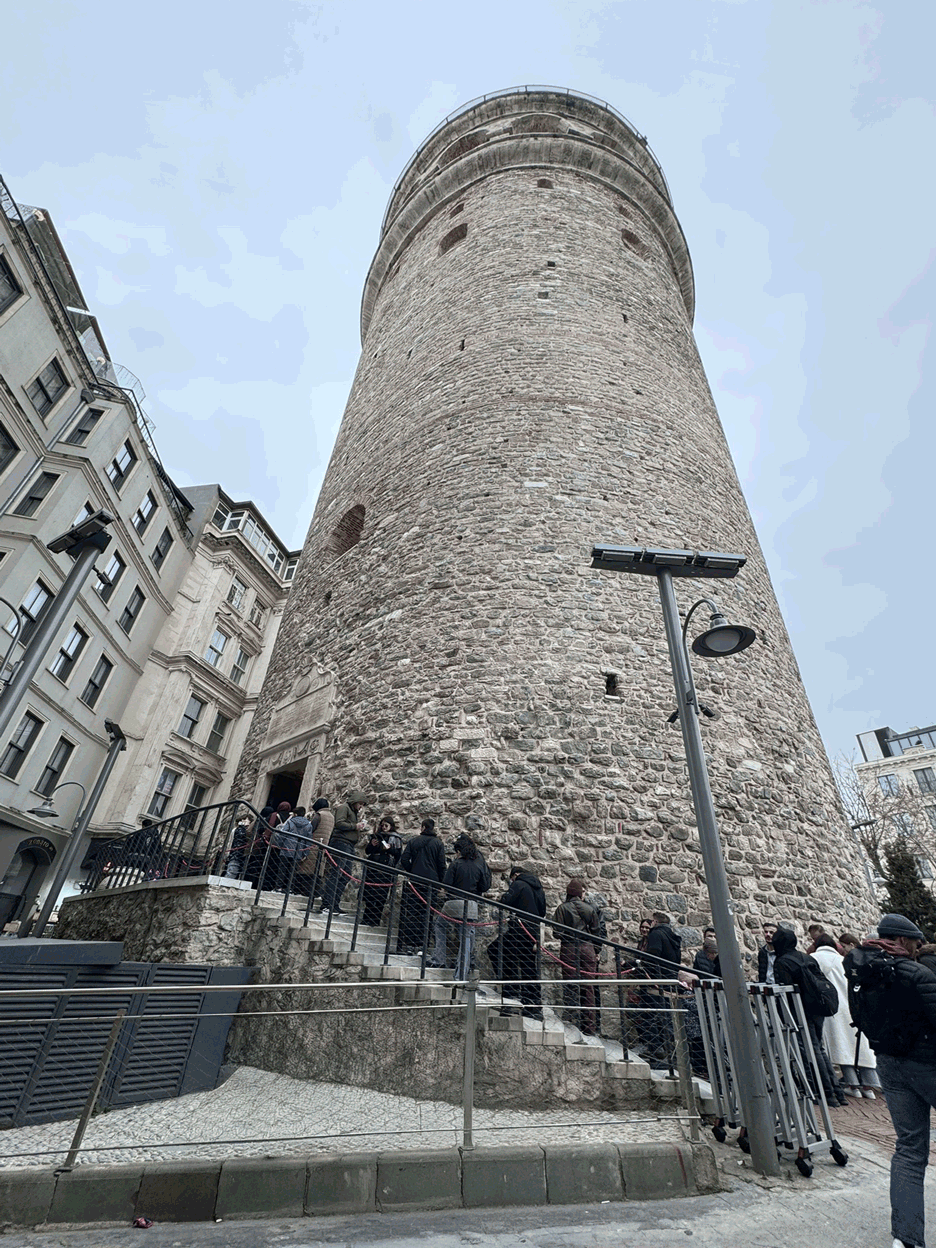
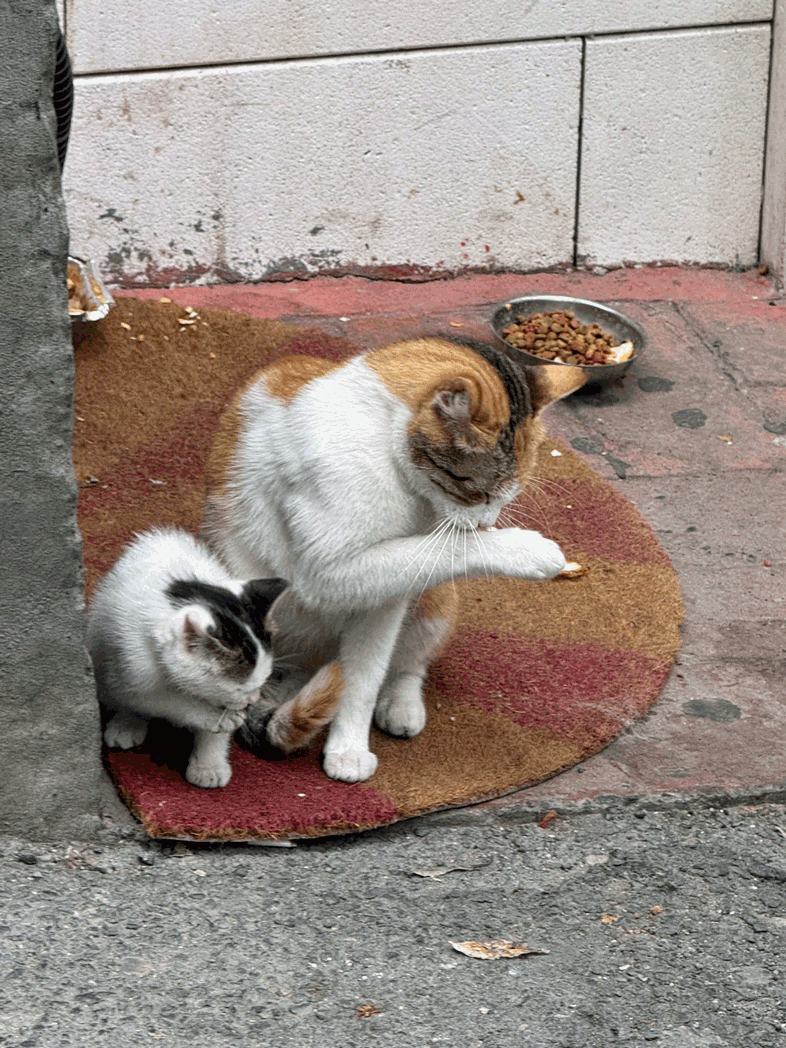
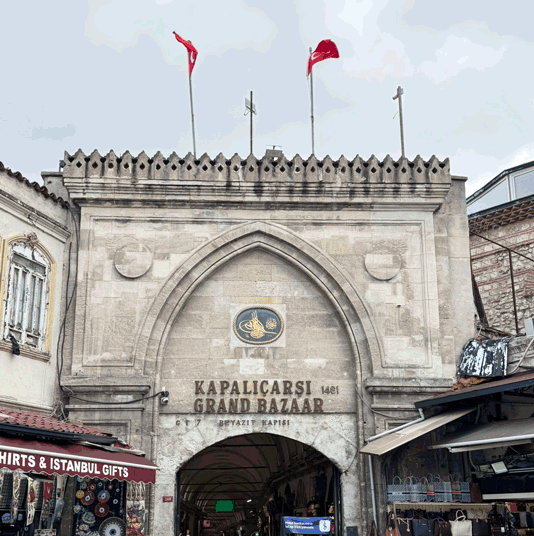
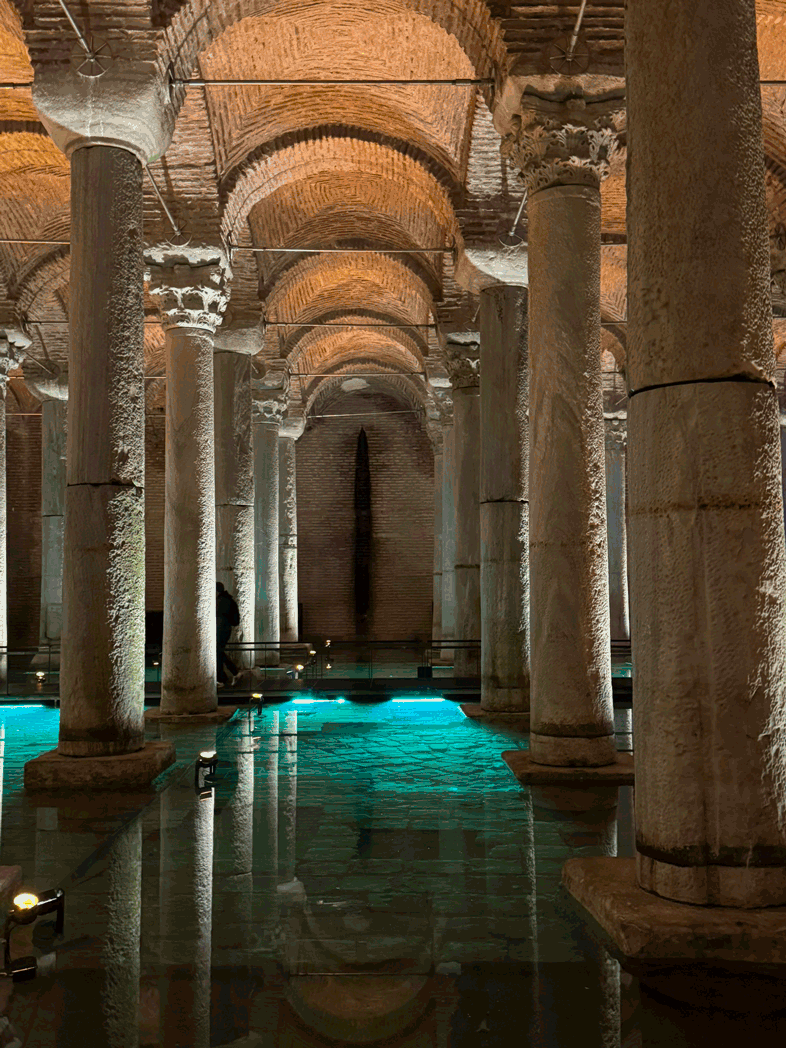
    A short tour also leaves room for ordinary Istanbul. I photographed Galata Tower, a cat with her kitten, and the Grand Bazaar entrance. Near Hagia Sophia, the Basilica Cistern takes you below the streets into the city’s Roman past. None of these was the reason I came as a pilgrim, but they helped me see the city as more than a collection of monuments.

    Galata Tower seen from the street in Istanbul
    Galata Tower.
    Cat and kitten on an Istanbul sidewalk
    A pause along the way.
    Entrance to Istanbul Grand Bazaar
    The Grand Bazaar entrance.
    Rows of columns reflected in the water of Istanbul Basilica Cistern
    The Basilica Cistern beneath the city.

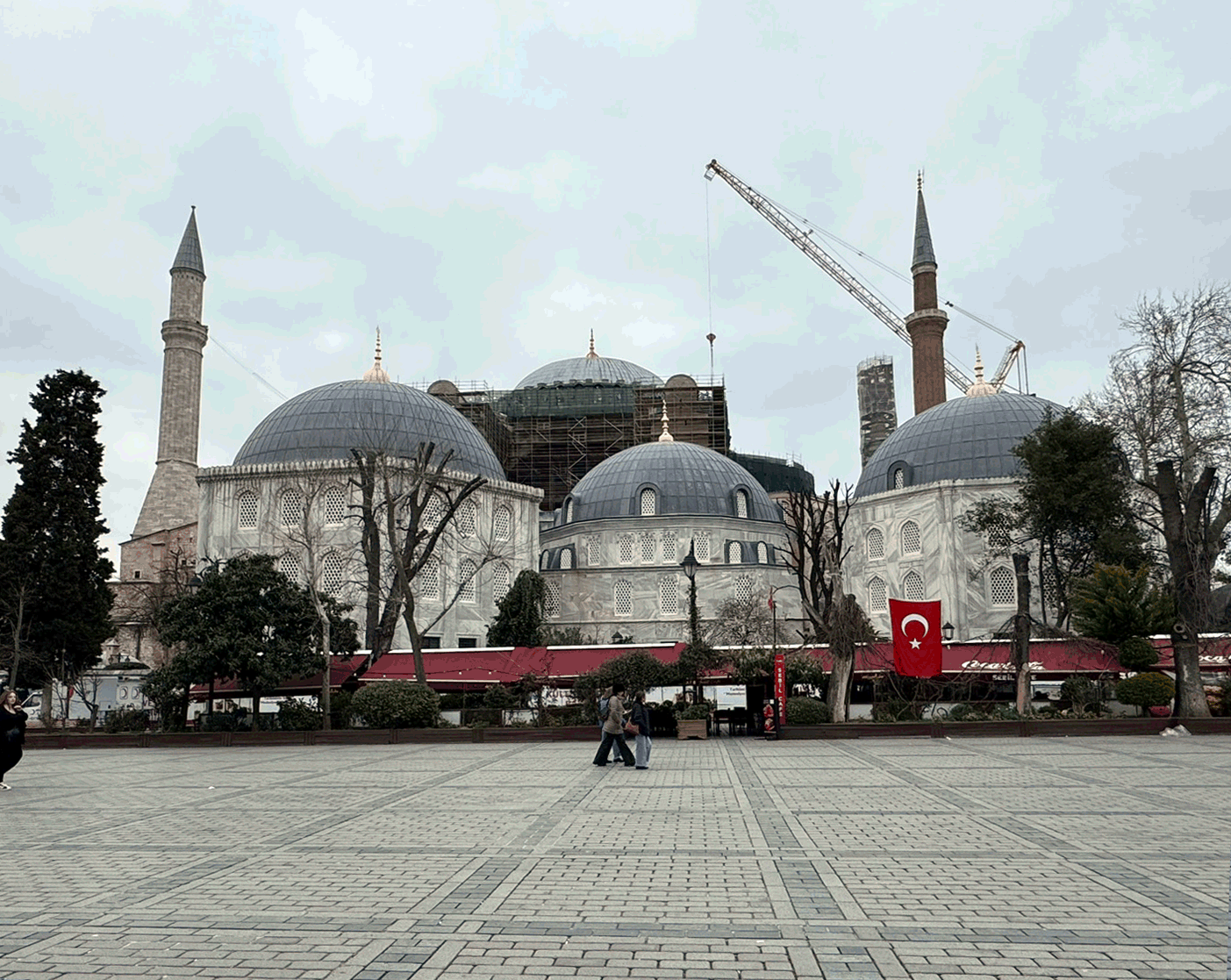
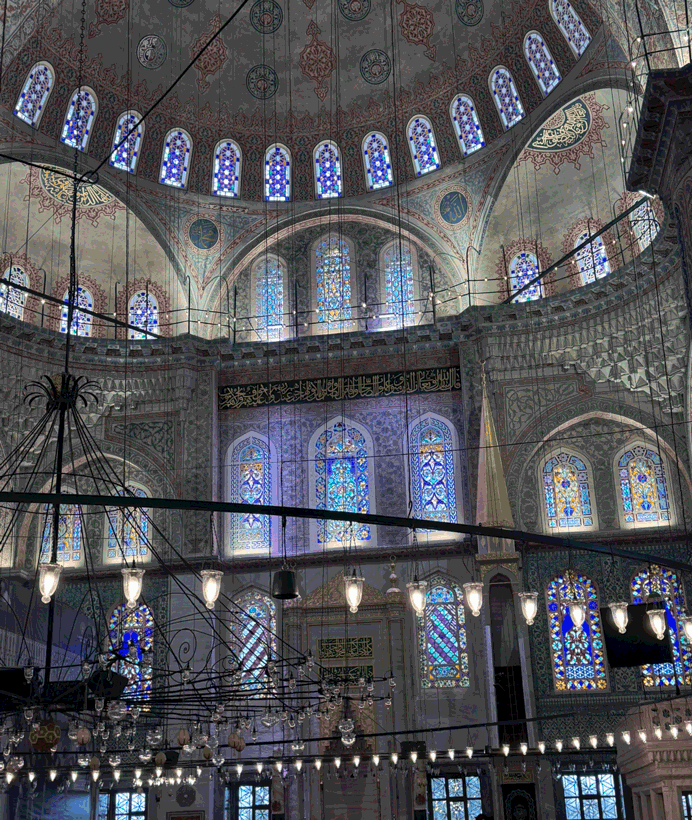
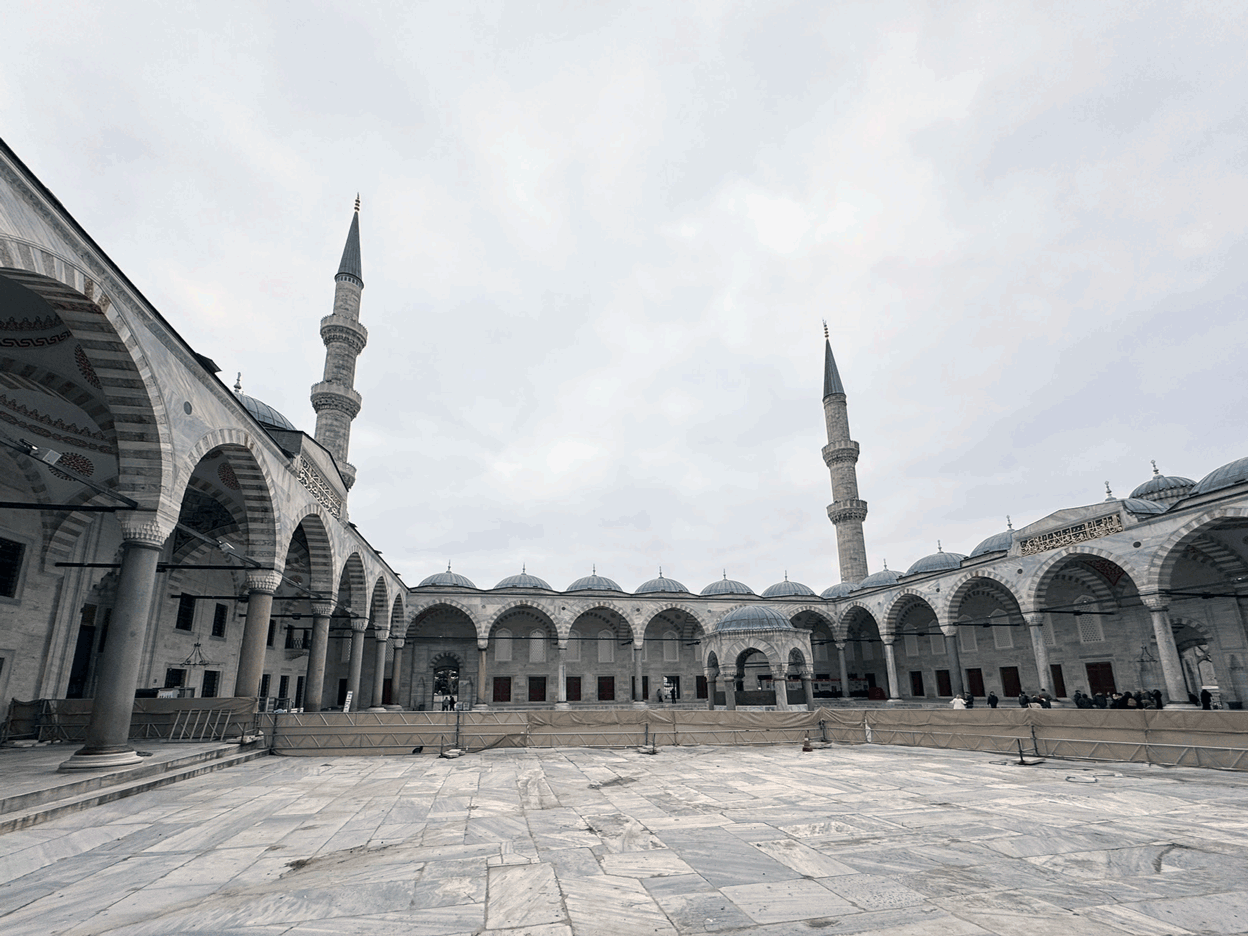
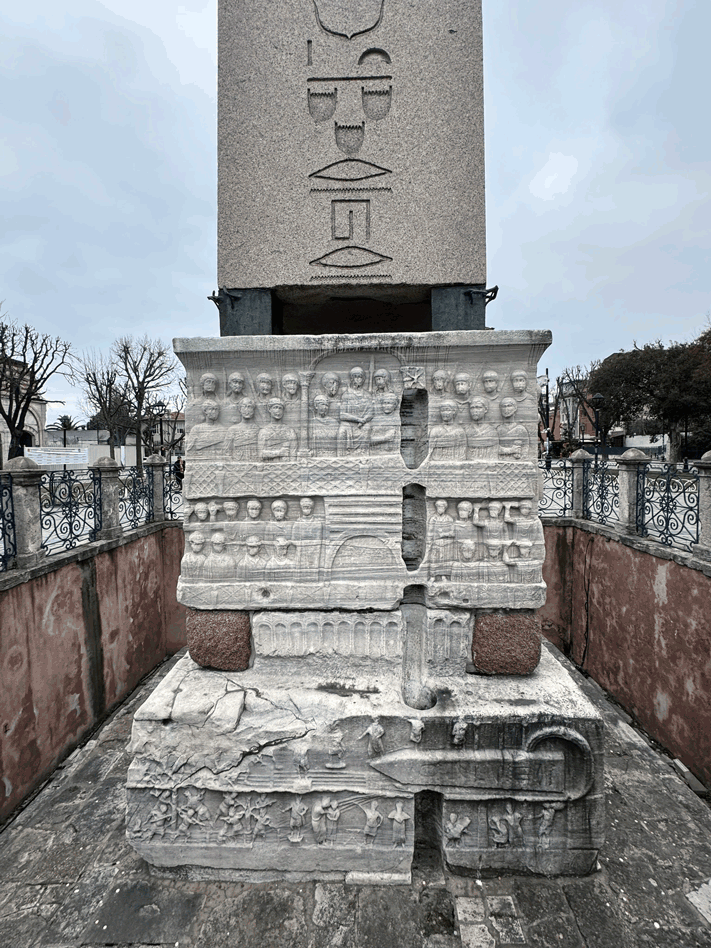
    Across Sultanahmet Square, I also photographed the Sultan Ahmed Mosque, often called the Blue Mosque, and its courtyard. It is another active house of worship. The ancient obelisk nearby stands in what was once Constantinople’s Hippodrome. In a few minutes’ walk you pass Roman, Byzantine and Ottoman history, while people around you are simply going about their day.

    Blue stained-glass windows and decorated dome inside Sultan Ahmed Mosque
    Inside the Blue Mosque.
    Courtyard and arcades of Sultan Ahmed Mosque in Istanbul
    The mosque courtyard.
    Base of the ancient Egyptian obelisk in Istanbul historic Hippodrome
    At the old Hippodrome.

    I would go back with more time. I would visit the churches I missed and leave room to pray with the Christians who live here now. This brief visit gave me a start: a face of Christ in a mosaic, a city still at prayer, and a much longer list for next time.

  • A Pilgrim’s Guide to the Basilica of Our Lady of Guadalupe in Mexico City

    A Pilgrim’s Guide to the Basilica of Our Lady of Guadalupe in Mexico City

    If you are going to the Basilica of Our Lady of Guadalupe, leave yourself more time than you think you need. You may come for Mass and the image of Our Lady, but the plaza, the older churches and Tepeyac Hill are worth time too.

    There is no need to see it all in a hurry.

    Historic churches and pilgrims around the Basilica of Guadalupe plaza in Mexico City
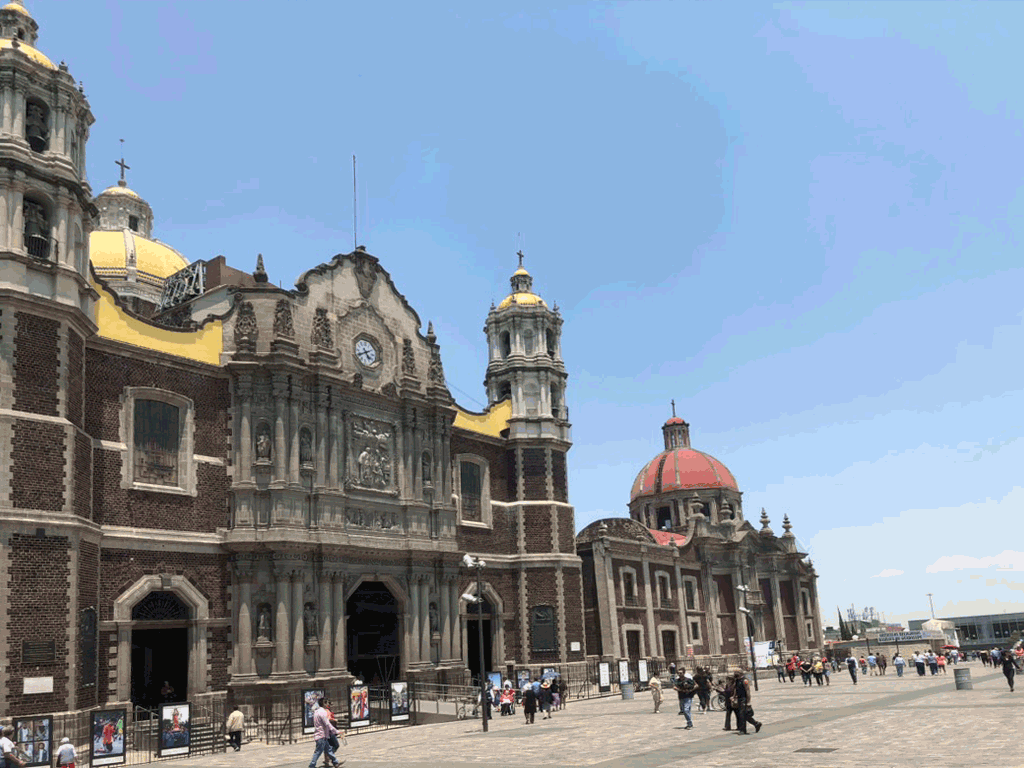
    The older churches beside the plaza.

    Start in the plaza

    The old Basilica is still here, though today it is called the Expiatory Temple of Christ the King. Nearby is the round new Basilica, completed in 1976 when the earlier church could no longer hold the crowds. From the plaza you can see both.

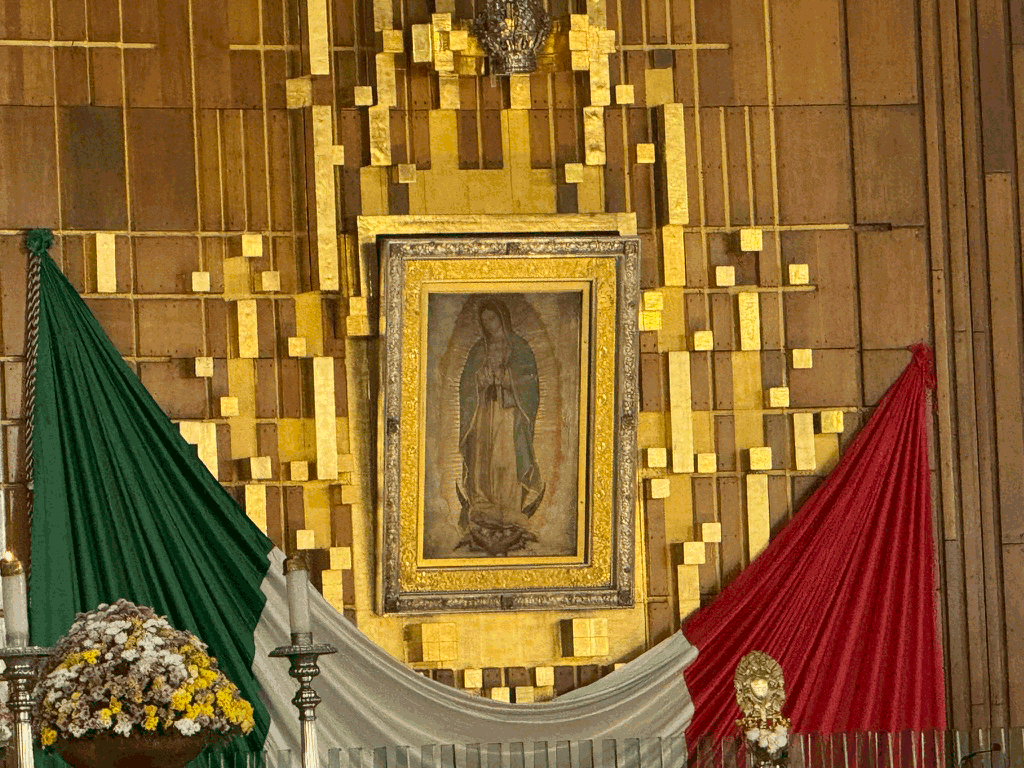
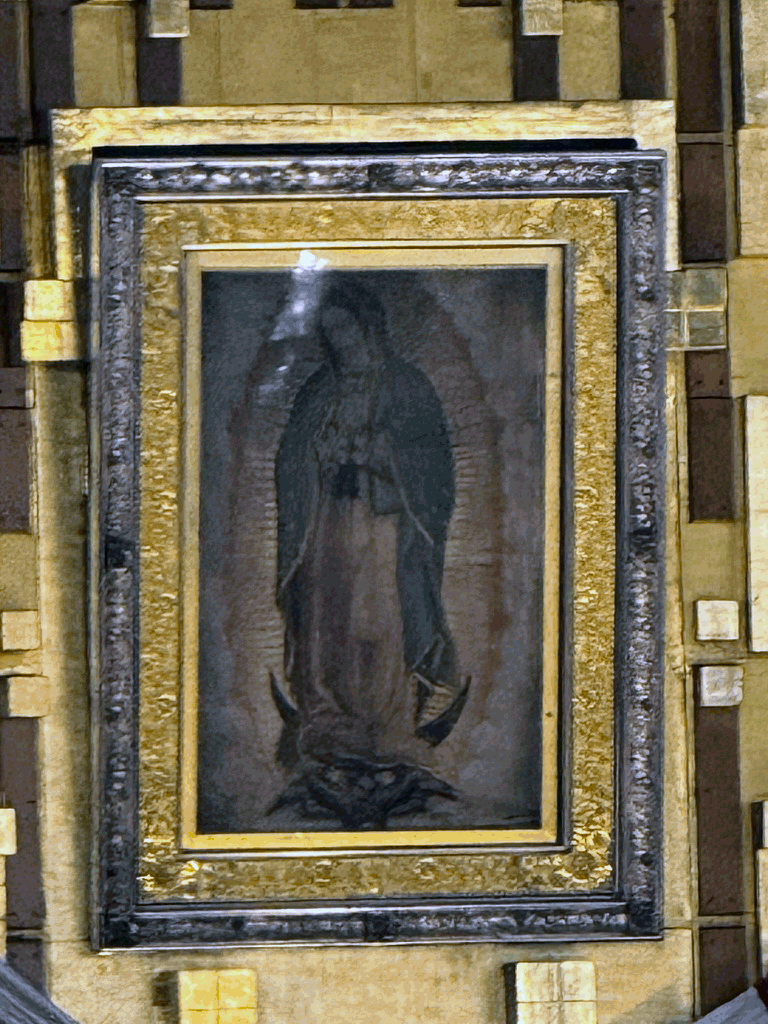
    Inside the new church, look toward the altar: the image of Our Lady of Guadalupe is visible even from the back.

    The image above the altar

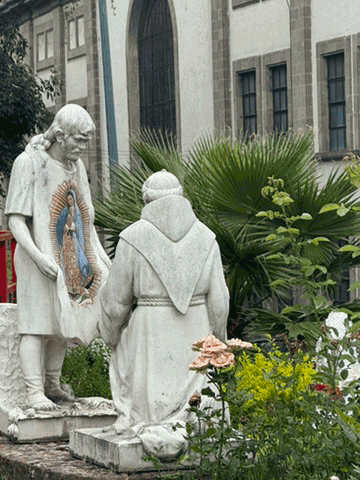
    This is why people come to Tepeyac. According to Catholic tradition, Our Lady appeared to St. Juan Diego at this very place in December 1531 and asked for a church to be built. Juan Diego took roses from the hill to the bishop inside his tilma.

    When he opened the cloak, the Lady’s image was on it. The image you see above the altar is the same one pilgrims have come to pray before for centuries.

    If you can, before you go to Mass try the moving walkway beneath the image. You will have only a brief moment as it carries you past the image to truly take in it’s beauty.

    Afterward, find a seat in the church. You can stay, pray for someone by name, or simply sit quietly for a few minutes and attend Mass if you wish.

    Stone sculpture of Juan Diego showing the image of Our Lady of Guadalupe on his tilma
    Juan Diego opens his tilma in a sculpture on the Basilica grounds.
    Close view of the framed image of Our Lady of Guadalupe inside the Basilica
    The image above the Basilica’s altar.

    Stay a while

    Once you have been inside, walk back through the grounds. Visit the old Basilica and the chapels if they are open. If you have the time and energy, go up toward Tepeyac Hill, the place associated with Mary’s meeting with Juan Diego.

    Our Lady of Guadalupe, I bring you the people I love and the things I cannot put right on my own. Pray for us, and lead us to your Son.

    Before you go

    The Basilica is in the north of Mexico City at Fray Juan de Zumárraga No. 2, Villa Gustavo A. Madero. Its posted opening hours are 6:00 a.m. to 9:00 p.m. daily. Check the official Mass schedule before you leave; times may change, especially around the December 12 feast.

    The Basilica’s directions page lists La Villa-Basílica on Metro Line 6 and Deportivo 18 de Marzo on Line 3 as nearby stations. Bring water if you plan to walk the grounds.

    For notices and contact information, use the official Basilica website.

    Watch Mass from the Basilica

    Can’t be there in person? The Basilica carries a live video feed. The stream shown there on October 4, 2026 is below. If it has ended, the Basilica’s website has the current video and Mass times. You can also visit its YouTube channel. Times are local to Mexico City.

  • World Mission Sunday

    World Mission Sunday

    Sharing the Gift of Faith: World Mission Sunday and CatholicMasses.org

    Each year, Catholics across the globe unite on World Mission Sunday to renew their commitment to spreading the Gospel and supporting missionaries who bring Christ’s love to the ends of the earth. This year’s celebration is especially meaningful as we reflect on how faith continues to transform lives in every corner of the world — from bustling cities to remote villages where the Church is often the only sign of hope.

    At CatholicMasses.org, our mission is to connect through virtual prayer, worship, and service. By supporting our community, you are also helping sustain missionary work through our Mass card enrollments and charitable offerings. When you order a Mass card or make a contribution through CatholicMasses.org, your gift directly supports priests, religious communities, and lay Catholic organizations we partner with serving around the globe. These men and women of faith bring the compassion of Christ to places where resources are few but their faith is strong.

    World Mission Sunday is a day when every baptized person shares in the mission of Christ. Mission is more than just the call to go forth and evangelize, it is the willingness to give from the heart and to share our faith and means with others, so that others may encounter God’s love.

    Your gift — no matter the size — helps us become part of the Church’s global acts of mercy, echoing Christ’s love.

  • Pope Leo Dilexi Te

    Pope Leo Dilexi Te

    Pope Leo XIV issued the apostolic exhortation Dilexi te (“I Have Loved You”) on October 4, 2025, calling the Church to renewed love for the poor. Released on the feast of Saint Francis of Assisi, the document reaffirms that love for the poor lies at the heart of Christian life. It is a call to conscience. The exhortation places God’s love in the middle of human suffering and asks for renewed responsibility from every believer in our faith. It is a direct appeal to unite the faithful together in faith with compassion.

    In Dilexi te, Pope Leo warns against separating holiness from humanity. He writes that prayer and worship lose meaning when they are detached from compassion and action. To love as Christ loved requires entering the experience of those who suffer and helping them regain dignity. He teaches that love for the poor is not an optional virtue because it is a central part of the faith. Without it, he says, “the Church becomes a choir singing to herself.” His words aim to awaken a Church that has grown comfortable in prosperity. Dilexi te continues the tradition of papal social teaching from Rerum Novarum to Fratelli Tutti, combining spiritual reflection with concern for justice.

    Pope Leo identifies two great challenges of our time: one economic and one spiritual. The first is the widening gap between the rich and the poor, the reduction of human life to a commodity, and the weakening of community. The second is more subtle—the idea that comfort excuses moral distance. Pope Leo laments a culture that praises generosity but allows exclusion to endure. He reminds us that the Gospel demands communion and mutual care. The poor, the migrant, the elderly, and the sick are not objects they are persons in whom grace is revealed.

    Throughout the exhortation, Pope Leo draws upon Scripture and the spiritual legacy of Saint Francis. He recalls Christ’s teaching, “Whatever you did for one of the least of these, you did for me,” and connects it to the Church’s vocation to be a “living parable of mercy.” Poverty, in this view, is not simply an economic reality but a revelation of God’s self-giving love. The Son of God became poor so that humanity could grow rich in compassion. Service to the poor is therefore an encounter with Christ Himself. Holiness is not separation from the world but communion with it.

    The document also addresses the danger of elitism, whether spiritual, intellectual, or economic. Pope Leo notes that some within both Church and society have developed a kind of cultural distance from ordinary every day people. He calls this a “subtle heresy” because it denies the heart of the Incarnation, that God chose to dwell among the humble. He describes the poor as “our teachers in faith,” whose endurance and hope reveal Christ more clearly than any theory. His concern is not wealth itself but the illusion that wealth gives permission to ignore others. He reminds readers that the true division in the world is between those who love and those who do not.

    One of the most pressing sections of Dilexi te speaks to Christian communities in prosperous nations. Pope Leo recalls how earlier generations responded to papal calls to bring the Gospel to new lands. He honors that spirit and urges a renewal suited to the present age. The mission field today is defined by human need rather than geography. Whether in the crowded cities of the global South or the forgotten corners of wealthy societies, the call to serve remains constant. He invites local Churches to renew their sense of mission as a communion of service.

    The Pope moves between contemplation and moral appeal. He recalls Saint Francis of Assisi, “the mirror of Christ’s poverty and joy.” Francis embraced lepers, lived among the poor, and saw all creation as brother and sister. His life is presented as an antidote to isolation. Pope Leo writes that the Franciscan witness reveals “a freedom born of detachment and a joy rooted in dependence on God.” He calls every Catholic to recover this simplicity, but not through nostalgia, through conversion of the heart. To live with less is to love more deeply.

    The exhortation highlights relational poverty as a sign of faith. Poverty in the Franciscan sense is not merely the lack of possessions but trust in God and others. It is a way of seeing that recognizes every good thing as a gift from God. Pope Leo echoes this in describing creation as “a sacrament of generosity.” He urges a renewal of the economy so that dignity comes before profit. He also links care for the earth with love for the poor. The exploitation of nature and the exploitation of people spring from the same blindness to God’s ownership of all things.

    The theological foundation of Dilexi te rests on three pillars: memory, conversion, and mission. Memory preserves the Church’s long tradition of service and the example of countless saints who gave without counting the cost. Conversion turns the heart toward God and away from comfort as the highest good. Mission sends believers out into the world as instruments of mercy. Pope Leo teaches that these three belong together. A Church that remembers without changing becomes static. A Church that changes without serving becomes self-absorbed. A Church that serves without memory loses her identity.

    The Pope also redefines charity in personal terms. True charity, he says, begins with encounter. “To see the poor is to allow oneself to be seen by them.” This relationship restores equality between giver and receiver. He cautions pastors and lay leaders not to measure service only by numbers or efficiency. He calls for friendship and presence. Church institutions can be professional and organized, but they must remain personal. “We cannot love humanity in general while ignoring the person in front of us.”

    Pope Leo also speaks about the formation of conscience. Many believers live with sincere faith but do not fully see the structures of social sin around them. He calls for renewed teaching that unites Scripture, prayer, and social responsibility. Schools, parishes, and Catholic media should form believers who understand that faith has public meaning. He acknowledges how difficult this is in a distracted world, yet reminds the faithful that the Cross remains the measure of love. “To love as Jesus loved is to share life completely.”

    His analysis of social reality is guided by theology. He identifies economic injustice, labor exploitation, and misuse of technology as forms of harm that distort the human person. Yet he avoids ideology. His concern is moral and spiritual. He teaches that the Church should avoid both withdrawal from the world and the loss of spiritual identity through activism. She must serve as a “school of humanity,” teaching societies to value persons over profits. This pattern of contemplation and action is central to our daily life: prayer that leads to work, and work that leads back to prayer.

    Pope Leo’s reflection on the Eucharist is one of the most moving parts of the exhortation. “In every consecrated Host,” he writes, “Christ hides his glory to become nourishment for the small.” The Eucharist becomes the pattern for Christian living: humble, giving, and full of love. The Pope asks priests and laypeople alike to approach the altar as co-workers in mercy. The liturgy fulfills its purpose when it leads to service. A Mass that does not bear fruit in love for the poor remains incomplete.

    The tone of Dilexi te is gentle and firm. Pope Leo speaks as a shepherd who loves his people yet expects growth. He honors the work of Catholic charities, mission groups, and lay movements, while urging them to preserve closeness and humility. Structures alone cannot love. Only persons can. He calls for renewal in religious life and asks communities to live their vows of poverty as a sign of hope. “Our vows are not walls,” he says, “but windows through which the world may see Christ’s mercy.”

    Later in the document, Pope Leo turns to the global dimension of solidarity. He notes that economic systems have become so connected that indifference in one region causes pain in another. He calls upon developed nations to shape policies that protect workers and the environment. Profit can never outweigh human dignity. He also encourages Churches in poorer regions to share their spiritual riches with the world. “Those who have less in goods often have more in grace.” The exchange of gifts among Churches—between North and South, rich and poor—reveals the true face of Catholic unity.

    This mutual exchange reflects the life of Saint Francis and his brothers, who sought communion rather than comfort. Their poverty drew them closer to others and to God. Dilexi te reclaims that meaning for today. The Pope does not ask everyone to live in material poverty, but he invites all to interior freedom. Generosity that springs from freedom becomes joy. In a culture that values control, this spirit of freedom is deeply countercultural.

    Pope Leo’s teaching finds a living expression in the mission of CatholicMasses.org, which brings together worship, reflection, and service on a global scale. Through daily streamed Masses and shared prayer, the community joins believers from many nations around the same Word and Sacrament. Technology becomes a bridge that carries faith rather than distraction. Our ministry provides a place for those seeking connection, a sign of communion across distance. In this way we are honored that CatholicMasses.org answers the call of Dilexi te to bring compassion into every corner of the world.

    The spirit of fraternity shapes the work of CatholicMasses.org. We seek to unite prayer with presence. Our partnerships with missions and Catholic organizations, and our remembrance of donor intentions in daily Masses, express the heart of Dilexi te. When Pope Leo urges the faithful to “make mercy visible,” we hope our ministry fulfills that vision through acts of solidarity. Each streamed Mass, reflection, and shared intention is part of a network of faith and charity that reaches across continents.

    The Pope’s call to live holiness through service can be seen in our daily work and our continued outreach to the poor, the sick, and the forgotten. These values are central to our mission.

    The warning in Dilexi te against elitism also speaks directly to us. We embrace everyone—the homebound, the distant, and the marginalized no matter what faith they practice. Our charitable work reaches all, it’s simply done through the lens of faith. We want to remove barriers that prevent many from participating in worship, particularly those who are homebound. In this way a digital Mass becomes an act of unity with brother and sisters.

    The call to simplicity and trust also resonates with us. Our partnerships with communities in Africa, Asia, and South America represent genuine collaboration rather than charity alone. We strive to get to know our partners personally and to form real genuine partnerships in our work. As we grow we will expand our network and relations and share knowledge among the participants.

    Pope Leo writes that “the poor evangelize us by their patience and hope.” Through our partner relationships, CatholicMasses.org learns from those it serves. Those who receive help often become examples of perseverance and hope for others.

    Communication itself is another theme shared by both the exhortation and the mission. Pope Leo teaches that the Gospel must be shared in every medium available while remaining true to its message. Technology must support communion rather than self-promotion. CatholicMasses.org fulfills this by using media to draw people closer to God and to the poor.

    In Dilexi te, love for the poor is called “the sacrament of encounter.” CatholicMasses.org brings this encounter into daily life. When we pray together online, we participate in the same mystery that unites the Church globally. The ideal of universal brotherhood comes alive when people across the world share the same prayer and Scripture, even though the words and translations may alter, the meaning is true. Through our ministry we can help to extend the Church’s presence to those who might otherwise be unseen.

    As Dilexi te closes, Pope Leo XIV recalls the words of Jesus from the Gospel of John: “As the Father has loved me, so I have loved you.” This love is a gift and a command to us. It calls us to examine our lives in it the light of our faith. Do our choices show divine generosity or fear? Are our communities open and welcoming? The Pope ends with a prayer to Mary, the Mother of the Poor, asking her to help the Church recognize Christ in every suffering person.

    Our mission society stands where prayer, service, and online communication meet. We are turning technology into an instrument of mercy and renewal and pray that Saint Carlo Acutis assists us with his compassion and prayers. The exhortation asks the Church to rediscover missionary zeal grounded in love for the poor, and we live that daily through our online outreach, global Masses, and shared faith community. We pray we can be a visible sign of the Church as we pray, serve, and unite.

    Dilexi te can be seen as a modern song of the poor. Like Saint Francis’s hymn to creation, it praises God through simplicity and compassion. It invites the Church to live with gratitude and generosity. Its message of mercy calls for a spirituality that is humble, joyful, and real.

    In the end, Dilexi te affirms that love for the poor reveals the abundance of God. It strips away false security and restores communion among people. Pope Leo’s vision hopeful, grounded in the belief that grace is stronger than greed. Every small act of mercy participates in God’s work of renewal. This conviction is what inspires we at CatholicMasses.org—the belief that the Gospel is a living presence shared daily among those who seek Christ, especially those who have little voice alone.

    The Church’s mission, renewed through Dilexi te, is to walk beside the poor and learn from them. In this companionship, the Church discovers her true identity again. CatholicMasses.org, through its ministry of prayer and service, stands as a witness to that discovery. Our family of donors, volunteers and partners give life to the exhortation’s final invitation: “Let us love, not in word or speech, but in deed and in truth.” In a world searching for meaning, such love reveals the face of God.
  • Christian VS Catholic

    Understanding the Words “Christian” and “Catholic”

    The word Christian is one of the oldest names for the followers of Jesus. The Acts of the Apostles tells us that “it was in Antioch that the disciples were first called Christians” (Acts 11:26). To be Christian means to believe in Jesus Christ, to be baptized in His name, and to follow His teachings. It is a word that unites all who profess faith in the Son of God.

    The word Catholic came soon after. It means “universal” in Greek. Early writers used it to describe the whole Church spread across nations, united in the same faith, sacraments, and leadership. By the second century, Saint Ignatius of Antioch spoke of “the Catholic Church,” meaning the complete and visible community of believers gathered around the bishops and in communion with the successor of Peter.

    All Catholics are Christians, but not all Christians are Catholics. The Catholic Church is the original community founded by Christ and His apostles. It continues to profess the same faith, celebrate the same sacraments, and live under the same mission that Jesus gave to His disciples: “Go therefore and make disciples of all nations, baptizing them in the name of the Father and of the Son and of the Holy Spirit” (Matthew 28:19).

    Over the centuries, other Christian communities emerged, each seeking to live the Gospel according to its own understanding of Scripture and tradition. The Catholic Church recognizes the faith and baptism shared with these brothers and sisters in Christ. The Second Vatican Council teaches that “many elements of sanctification and of truth are found outside the visible confines of the Catholic Church,” and that these elements “are gifts belonging to the Church of Christ” (Lumen Gentium, 8).

    The Catholic Church sees herself as the fullness of the Christian faith, holding together Scripture, tradition, and the sacramental life as handed down from the apostles. Her unity is expressed in the creed we profess each Sunday: “I believe in one, holy, catholic, and apostolic Church.” The word catholic in that creed still means universal—a Church open to every people, language, and culture.

    To be Catholic is to be part of this universal communion. It means belonging to a faith that has spanned centuries and continents, celebrating the same Eucharist that the early Christians celebrated, and remaining in communion with the successor of Peter, the Bishop of Rome.

    To be Christian is to belong to Christ. To be Catholic is to live that belonging within the Church that He founded. Both words speak of identity and relationship. They remind us that faith is not lived in isolation but in communion—with God and with one another.

    In a world that often divides, these words invite unity. The Christian name marks the beginning of faith. The Catholic name expresses its fullness. Together, they call every believer to follow Christ more closely, to seek holiness, and to bear witness to His love in the world.

    General Donation

    Your tax-deductible donation today will support our Catholic Mission Society and global outreach to the poor. Thank you for being generous to those in need. May God bless you for your kindness.

    Category:
    Tags:
  • Church Songs

    Songs of the Catholic Church

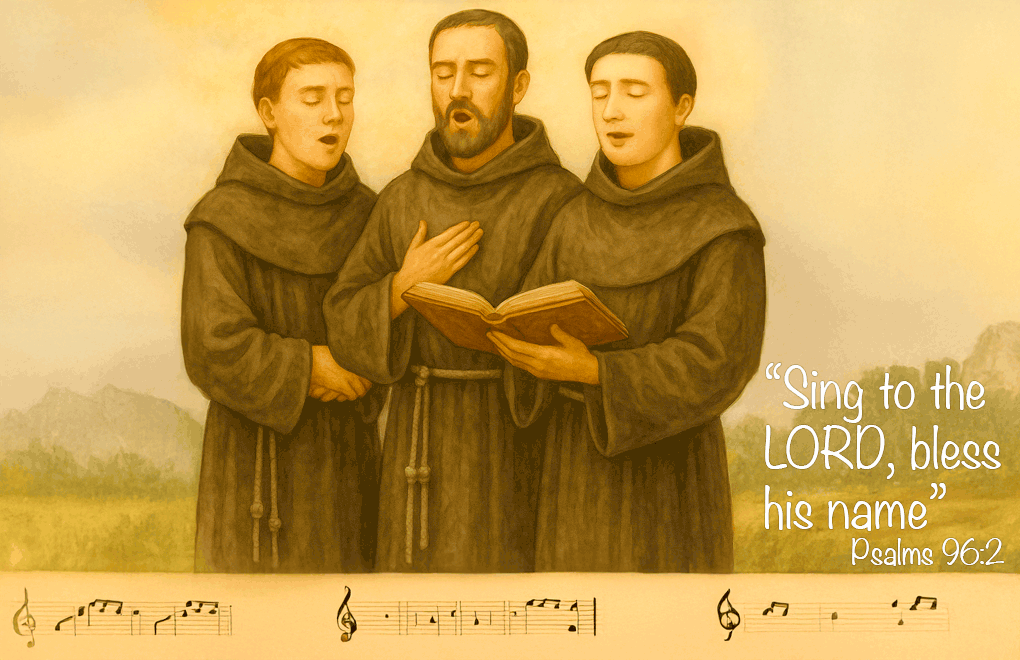
    Music has always been part of the Church’s prayer. From the first gatherings of Christians to the great cathedrals of Europe, song has carried the voice of faith through the centuries. Each hymn, whether ancient or new, helps the faithful lift their hearts to God.

    Gregorian Chant remains the foundation of Catholic sacred music. Its melodies, sung in unison and free rhythm, give life to the words of Scripture. The Kyrie eleison, Gloria in excelsis Deo, and Agnus Dei are familiar examples. These chants are sung not to entertain but to pray. The simplicity of the line draws the soul into stillness, allowing the Word of God to speak clearly.

    Among the best-known Marian chants is the Salve Regina (“Hail, Holy Queen”). This hymn has been sung for nearly a thousand years in monasteries, processions, and the Rosary. It expresses trust in Mary’s intercession and her care for those who seek her help.

    The Church also treasures the Eucharistic hymns of Saint Thomas Aquinas, written in the thirteenth century for the feast of Corpus Christi. Hymns such as Pange Lingua Gloriosi, Tantum Ergo Sacramentum, and Adoro Te Devote honor the real presence of Christ in the Eucharist. Their poetry and reverence continue to inspire prayer before the Blessed Sacrament.

    In later centuries, new hymns enriched the life of the Church. O Salutaris Hostia praises Christ who opens heaven through His sacrifice. Holy God, We Praise Thy Name proclaims God’s majesty and is often sung at Benediction and feast days. Immaculate Mary celebrates devotion to Our Lady, echoing the faith of pilgrims at Lourdes and beyond.

    The Ave Maria has become one of the most beloved prayers in song. Composers such as Schubert and Gounod gave musical form to the angel’s greeting to Mary. Wherever it is sung, the Ave Maria reminds the faithful of Mary’s presence in the story of salvation.

    During Lent, the Church turns to hymns like Attende Domine (“Hear Us, O Lord”) and Stabat Mater (“At the Cross Her Station Keeping”). These songs invite reflection on repentance and the sorrow of the Blessed Mother at the foot of the Cross. At Easter, joyful hymns such as Regina Caeli Laetare (“Queen of Heaven, Rejoice”) and Jesus Christ Is Risen Today proclaim the victory of the Resurrection.

    In more recent times, hymns in the English language have become part of Catholic memory and devotion. Here I Am, Lord, based on Isaiah 6, speaks of God’s call and the believer’s response. Be Not Afraid offers comfort from the words of Scripture: “Do not be afraid; I am with you.” These songs are often heard in parish liturgies and at moments when faith must overcome fear.

    Catholic funerals, in particular, carry some of the most beloved modern hymns. On Eagle’s Wings, based on Psalm 91, assures the grieving that God’s love will lift and sustain them: “And He will raise you up on eagle’s wings, bear you on the breath of dawn.” Other favorites include Amazing Grace, How Great Thou Art, and I Am the Bread of Life. Each one expresses hope in eternal life and trust in God’s mercy.

    The Church welcomes many musical forms, but all sacred music shares one purpose: to glorify God and sanctify the faithful. The Second Vatican Council reaffirmed that sacred music should “add delight to prayer, foster unity of minds, and give solemnity to the liturgy.” In this way, music becomes not performance but prayer.

    From ancient monasteries to today’s parish pews, the songs of the Church have never ceased. Every chant, hymn, and psalm reminds the faithful that praise is part of the Christian life. Saint Augustine once said, “He who sings prays twice.” In song, the heart speaks what words alone cannot say.

    The melodies may differ from one country to another, yet the purpose is the same—to lift the soul to God. Whether through Gregorian chant, Marian hymns, Eucharistic praise, or modern songs of hope, the voice of the Church continues to sing across time: a single hymn of faith, gratitude, and love.

    General Donation

    Your tax-deductible donation today will support our Catholic Mission Society and global outreach to the poor. Thank you for being generous to those in need. May God bless you for your kindness.

    Category:
    Tags:
  • Morning Prayers

    Start your day with God

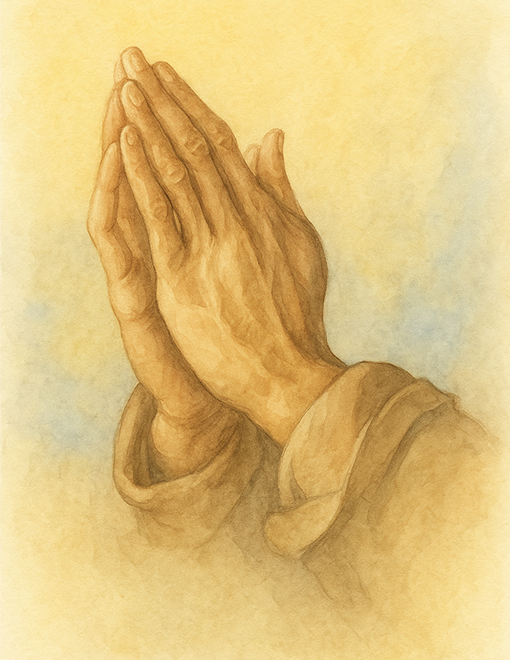
    Each morning, when the light returns and we open our eyes to a new day, the Church invites us to begin with prayer. Morning prayer is one of the most ancient practices of Christian life. It is the moment when we turn our first thoughts toward God and give Him the first fruits of our attention.

    From the earliest centuries, Christians understood that prayer orders the heart. Saint Basil once wrote that we should “give thanks to God as soon as we are awake, before all else.” The rhythm of morning prayer shapes how we see the hours ahead. It reminds us that life is a gift and that every task, large or small, can become an act of love.

    The psalmist says, “O Lord, in the morning you hear my voice; in the morning I plead my case to you, and watch” (Psalm 5:3). The first prayer of the day is not meant to be complicated. It is a turning of the soul toward the One who created the dawn. Even a brief moment of silence before the Lord has power to steady the heart.

    Many Catholics begin the day with the Sign of the Cross and the Morning Offering:

    O Jesus, through the Immaculate Heart of Mary,
    I offer You my prayers, works, joys, and sufferings of this day
    for all the intentions of Your Sacred Heart,
    in union with the Holy Sacrifice of the Mass throughout the world,
    for the salvation of souls, the reparation of sins,
    and the reunion of all Christians.
    I offer them for the intentions of our Holy Father, the Pope,
    and for all that You desire, my Lord. Amen.

    This prayer expresses the heart of Catholic spirituality. It unites our daily life to the Eucharist being celebrated around the world. It reminds us that even ordinary work or quiet suffering can be offered as prayer. In that offering, we live the words of Saint Paul: “Whatever you do, in word or deed, do everything in the name of the Lord Jesus” (Colossians 3:17).

    Another beautiful practice is to pray the Canticle of Zechariah (Luke 1:68–79), also known as the Benedictus. It is the prayer of John the Baptist’s father, spoken at the dawn of salvation history:

    Blessed be the Lord, the God of Israel;
    He has come to His people and set them free.
    He has raised up for us a mighty savior,
    born of the house of His servant David.

    The Benedictus praises God for His faithfulness. It reminds us that the light of Christ rises each morning to scatter the darkness of fear and sin. Praying it at sunrise places us in the story of salvation that continues to unfold each day.

    Some also begin with the Prayer to the Holy Spirit, asking for guidance in every word and action:

    Come, Holy Spirit, fill the hearts of your faithful,
    and kindle in them the fire of your love.
    Send forth your Spirit and they shall be created,
    and You shall renew the face of the earth.

    This prayer, short and simple, invites the Spirit to dwell within us as we go about the day’s work. It prepares us to meet each person with patience and kindness.

    In monasteries and convents, the Church’s official morning prayer is called Lauds, part of the Liturgy of the Hours. It begins with the words, “Lord, open my lips, and my mouth will proclaim your praise.” Even if we cannot pray the full Office, this line can become a daily habit. It acknowledges that our speech, our thoughts, and our choices belong to God.

    Morning prayer is not about reciting many words. It is about beginning the day in relationship with the Lord. Whether you pray a traditional formula, read a psalm, or simply speak from your heart, what matters is faithfulness. Each morning offers a new chance to consecrate the day to God’s glory.

    Pope Francis often reminds the faithful to begin each day with gratitude. In one of his homilies he said, “The first step toward holiness is to live each day by saying ‘Thank you, Lord.’” Gratitude turns duty into joy. It helps us see grace in the ordinary.

    As the hours of the day unfold, morning prayer remains an anchor. It carries us through decisions, conversations, and work. When we begin with prayer, our hearts remember throughout the day that we walk with Christ.

    The Church’s tradition offers many prayers, yet the most powerful words are sometimes the simplest:

    Good morning, Lord. I thank You for this new day.
    Be with me in all I do. Bless my family, my work, and my thoughts.
    May everything I say and do give glory to Your name. Amen.

    When we rise each day and lift our hearts to God, we join millions of believers who do the same. The sun rises over monasteries, cities, and villages, and the Church prays with one voice. Morning prayer joins heaven and earth in praise. It begins the day with faith, and faith makes every moment holy.

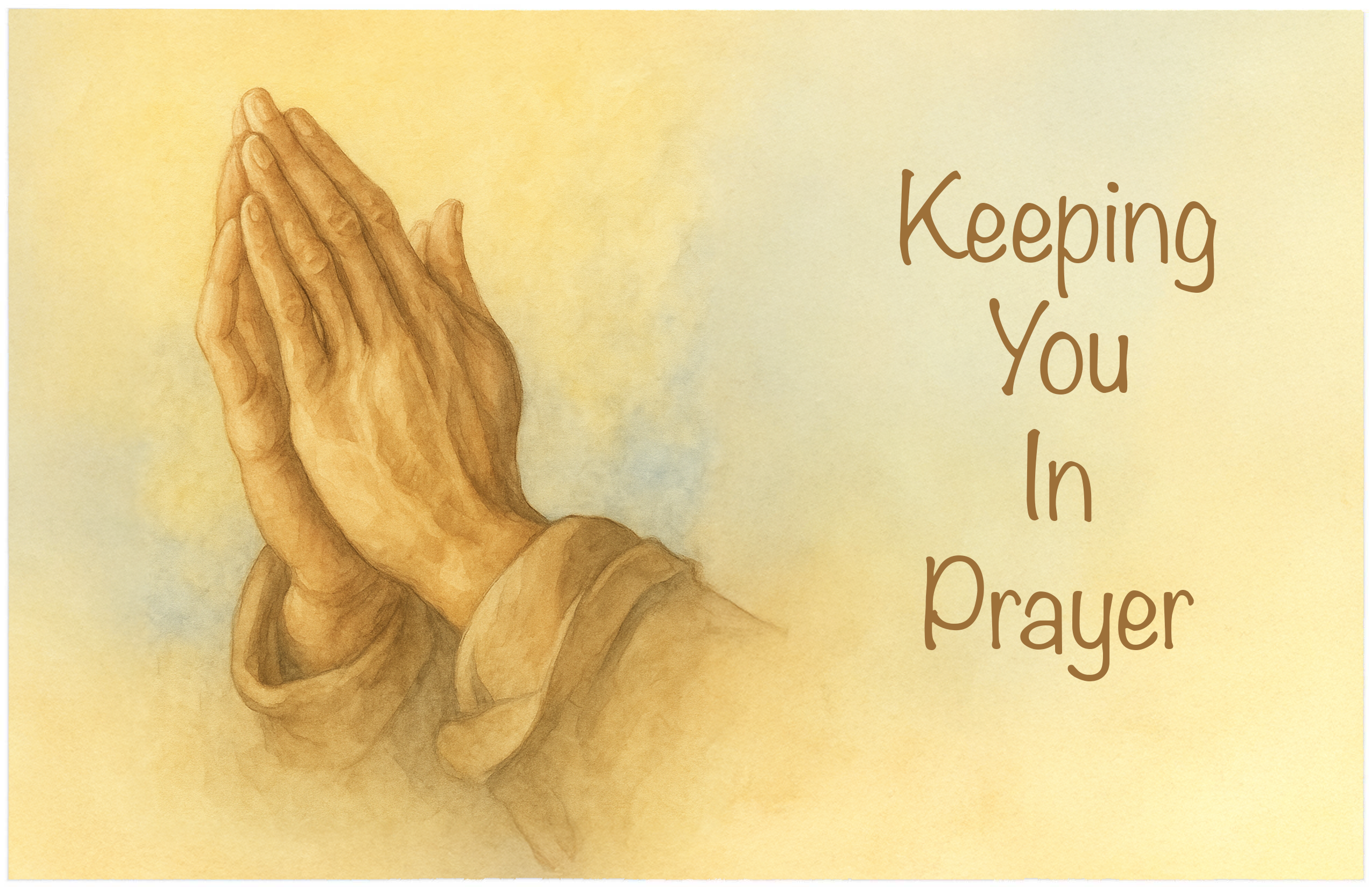
    Keeping You In Prayer

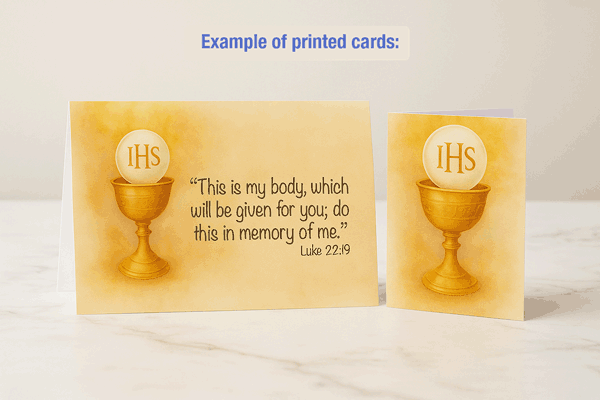
    We will send a printable card to the recipient’s email with instructions how to print the card at home. Each card has the image to the left with a personal message from you (optional below).  Our electronic enrollment cards offer comfort, prayer, and hope through the gift of a spiritual enrollment into our mission society which includes remembering your intentions in community Masses and prayers through our global partners and beneficiaries.

    Deliver a prayerful message of hope to a loved one today.

    Description

    Send a meaningful Mass Card Enrollment directly to a loved one. By enrolling them, you unite their name with the prayers and community Masses offered by our partner religious organizations around the world. This special gift supports Catholic mission work around the world. If you do not know your loved one’s email we suggest you send the card to yourself and deliver it by mail or in person.

    Your gift supports the Catholic Church’s international ministries and will be used to sustain clergy and provide vital aid such as: food, clean water, health care, and education for those most in need. Our mission society partners with communities like the Franciscans, Lasallians, Jesuits, and other Catholic organizations world-wide. We don’t ask you for a specific donation; we ask only that you give the most generous amount in your heart today. Every offering is a blessing to those in need who seek Christ’s mercy. May God bless you for supporting our global missions.

  • Gregorian Chant

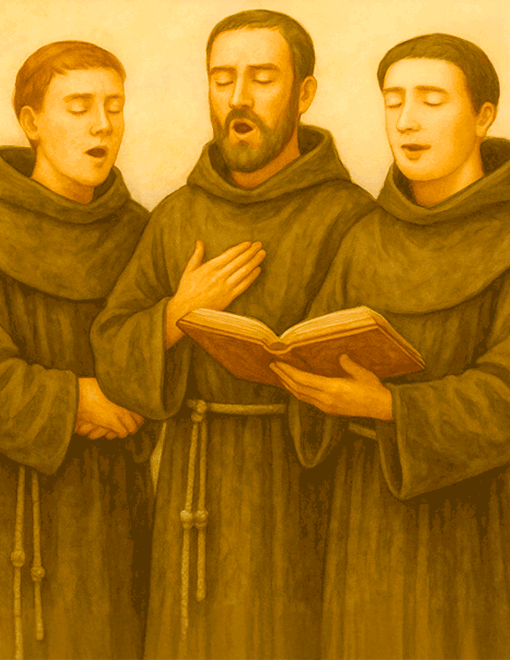
    Gregorian chant has long been known as the song of the Church. When it is heard, a quiet reverence fills the air. The sound is pure and prayerful. It does not rely on instruments or rhythm to hold attention. It simply carries sacred words on a single melodic line. Each note rises and falls gently, lifting your heart toward God. This is why the Church has long said that chant belongs in a special way to her liturgy.

    From the earliest centuries, Christians sang the Psalms, Scripture, and prayers in ways that reflected the beauty and holiness of what they believed. The faithful learned melodies that gave shape to their prayer, and through song, they carried the Word of God into daily life.

    By the sixth century, Pope Gregory the Great gave new order to the musical tradition of chants. He gathered the sacred chants of Rome, organized them and ensured that they could be preserved and taught. His work was so influential that this body of sacred song came to bear his name: Gregorian chant.

    For centuries, monks in monasteries rose before dawn to sing these ancient melodies. Cathedrals taught them to choirs of boys and clerics. The Church has learned to pray through Gregorian chant.

    Through time, wars, reformations, and changing musical fashions, Gregorian chant endured. It was preserved especially in monasteries, where communities such as the Benedictine monks of Solesmes in France took up the task of restoration during the nineteenth century. They studied old manuscripts, repaired damaged scores, and worked to recover the original rhythm and purity of the melodies. Their dedication gave the Church the Liber Usualis, a monumental book containing the chants for the Mass and Divine Office. Because of their careful work, chant once again became known throughout the world as the standard of sacred music.

    At the Second Vatican Council, the bishops of the world reaffirmed the importance of chant in the life of the Church. The document Sacrosanctum Concilium states that “the Church acknowledges Gregorian chant as specially suited to the Roman liturgy; therefore, other things being equal, it should be given pride of place in liturgical services.” This teaching reflects the timeless character of chant. Its beauty is not a fad. It remains close to Scripture, humble in form, and universal in spirit.

    Gregorian chant is sung in unison, without harmony or accompaniment. It is not meant to entertain or to be performance in nature. It invites prayerful contemplation. The melody follows the natural rhythm of the words, allowing the listener to focus on their meaning. The modes and intervals are ancient, shaped uniquely for contemplation. When even a small group choir begins to sing Kyrie eleison, the sound unites the whole Church in worship. The melody opens a path for the soul to listen more deeply.

    Singing chant also connects us to the those who came before us. When we hear it in a parish today, we share something with the monks who sang it in stone chapels a thousand years ago. We join the voices of the faithful who heard it under the vaulted ceilings of medieval cathedrals. Chant bridges centuries. It unites believers in every age with the same faith and the same praise.

    In our own time, the Church continues to cherish this tradition. Pope Francis spoke often of the importance of sacred music that draws people toward prayer. The Vatican’s Pontifical Institute of Sacred Music continues to train musicians and clergy in chant and polyphony, ensuring that the sound of the Church’s prayer remains faithful to its roots. Recently, the Vatican launched the initiative “Let’s Sing with the Pope”, inviting Catholics worldwide to learn the simple beauty of Gregorian chant alongside the Holy Father, Pope Leo XIV. This project helps the world rediscover a form of music that nourishes faith through reverence and peace.

    Gregorian chant remains what it has always been: prayer set to melody. It does not belong to one culture or century. When the faithful listen or sing, they are united with generations who found in these tones a way to enter into the divine mystery of God. Its simplicity is sacred.

    As the Church renews its attention to chant in our own day, the Spirit breathes through an ancient gift once more. In a world filled with noise, Gregorian chant teaches us again how to listen, how to pray, and how to find stillness in the presence of God.
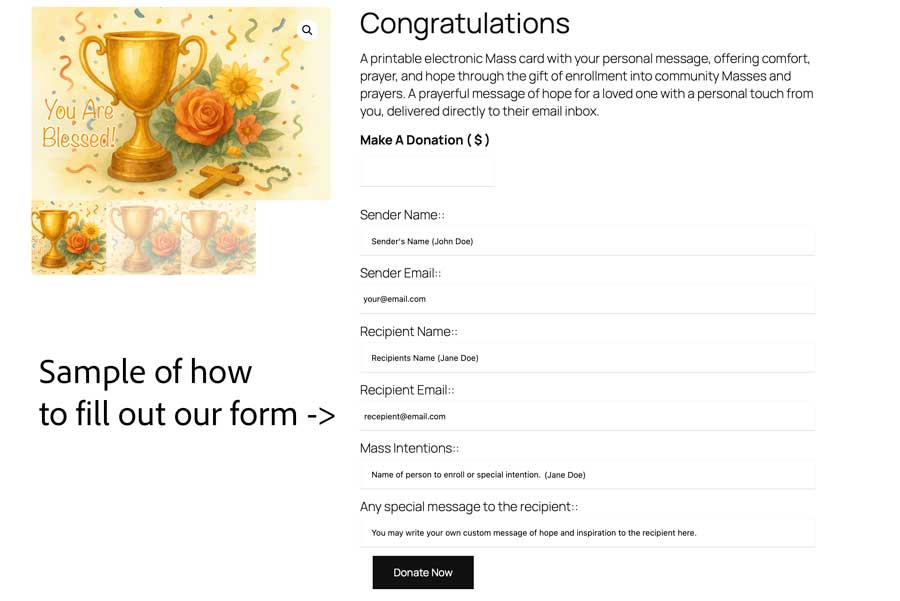
    Gregorian Mass Card

    We will send a printable card to the recipient’s email with instructions how to print the card at home. Each card has the image to the left with a personal message from you (optional below).  Our electronic enrollment cards offer comfort, prayer, and hope through the gift of a spiritual enrollment into our mission society which includes remembering your intentions in community Masses and prayers through our global partners and beneficiaries.

    Deliver a prayerful message of hope to a loved one today.

    Description

    Pope Gregory the Great was known as an advocate for the poor and promoter of missions, he also is credited with popularizing Gregorian Chant.

    Send a meaningful Mass Card Enrollment directly to a loved one. By enrolling them, you unite their name with the prayers and community Masses offered by our partner religious organizations around the world. This special gift supports Catholic mission work around the world. If you do not know your loved one’s email we suggest you send the card to yourself and deliver it by mail or in person.
    Your gift supports the Catholic Church’s international ministries and will be used to sustain clergy and provide vital aid such as: food, clean water, health care, and education for those most in need. Our mission society partners with communities like the Franciscans, Lasallians, Jesuits, and other Catholic organizations world-wide. We don’t ask you for a specific donation; we ask only that you give the most generous amount in your heart today. Every offering is a blessing to those in need who seek Christ’s mercy. May God bless you for supporting our global missions.