The Latest News & Updates

  • Gregorian Chant

    Gregorian chant has long been known as the song of the Church. When it is heard, a quiet reverence fills the air. The sound is pure and prayerful. It does not rely on instruments or rhythm to hold attention. It simply carries sacred words on a single melodic line. Each note rises and falls gently, lifting your heart toward God. This is why the Church has long said that chant belongs in a special way to her liturgy.

    From the earliest centuries, Christians sang the Psalms, Scripture, and prayers in ways that reflected the beauty and holiness of what they believed. The faithful learned melodies that gave shape to their prayer, and through song, they carried the Word of God into daily life.

    By the sixth century, Pope Gregory the Great gave new order to the musical tradition of chants. He gathered the sacred chants of Rome, organized them and ensured that they could be preserved and taught. His work was so influential that this body of sacred song came to bear his name: Gregorian chant.

    For centuries, monks in monasteries rose before dawn to sing these ancient melodies. Cathedrals taught them to choirs of boys and clerics. The Church has learned to pray through Gregorian chant.

    Through time, wars, reformations, and changing musical fashions, Gregorian chant endured. It was preserved especially in monasteries, where communities such as the Benedictine monks of Solesmes in France took up the task of restoration during the nineteenth century. They studied old manuscripts, repaired damaged scores, and worked to recover the original rhythm and purity of the melodies. Their dedication gave the Church the Liber Usualis, a monumental book containing the chants for the Mass and Divine Office. Because of their careful work, chant once again became known throughout the world as the standard of sacred music.

    At the Second Vatican Council, the bishops of the world reaffirmed the importance of chant in the life of the Church. The document Sacrosanctum Concilium states that “the Church acknowledges Gregorian chant as specially suited to the Roman liturgy; therefore, other things being equal, it should be given pride of place in liturgical services.” This teaching reflects the timeless character of chant. Its beauty is not a fad. It remains close to Scripture, humble in form, and universal in spirit.

    Gregorian chant is sung in unison, without harmony or accompaniment. It is not meant to entertain or to be performance in nature. It invites prayerful contemplation. The melody follows the natural rhythm of the words, allowing the listener to focus on their meaning. The modes and intervals are ancient, shaped uniquely for contemplation. When even a small group choir begins to sing Kyrie eleison, the sound unites the whole Church in worship. The melody opens a path for the soul to listen more deeply.

    Singing chant also connects us to the those who came before us. When we hear it in a parish today, we share something with the monks who sang it in stone chapels a thousand years ago. We join the voices of the faithful who heard it under the vaulted ceilings of medieval cathedrals. Chant bridges centuries. It unites believers in every age with the same faith and the same praise.

    In our own time, the Church continues to cherish this tradition. Pope Francis spoke often of the importance of sacred music that draws people toward prayer. The Vatican’s Pontifical Institute of Sacred Music continues to train musicians and clergy in chant and polyphony, ensuring that the sound of the Church’s prayer remains faithful to its roots. Recently, the Vatican launched the initiative “Let’s Sing with the Pope”, inviting Catholics worldwide to learn the simple beauty of Gregorian chant alongside the Holy Father, Pope Leo XIV. This project helps the world rediscover a form of music that nourishes faith through reverence and peace.

    Gregorian chant remains what it has always been: prayer set to melody. It does not belong to one culture or century. When the faithful listen or sing, they are united with generations who found in these tones a way to enter into the divine mystery of God. Its simplicity is sacred.

    As the Church renews its attention to chant in our own day, the Spirit breathes through an ancient gift once more. In a world filled with noise, Gregorian chant teaches us again how to listen, how to pray, and how to find stillness in the presence of God.
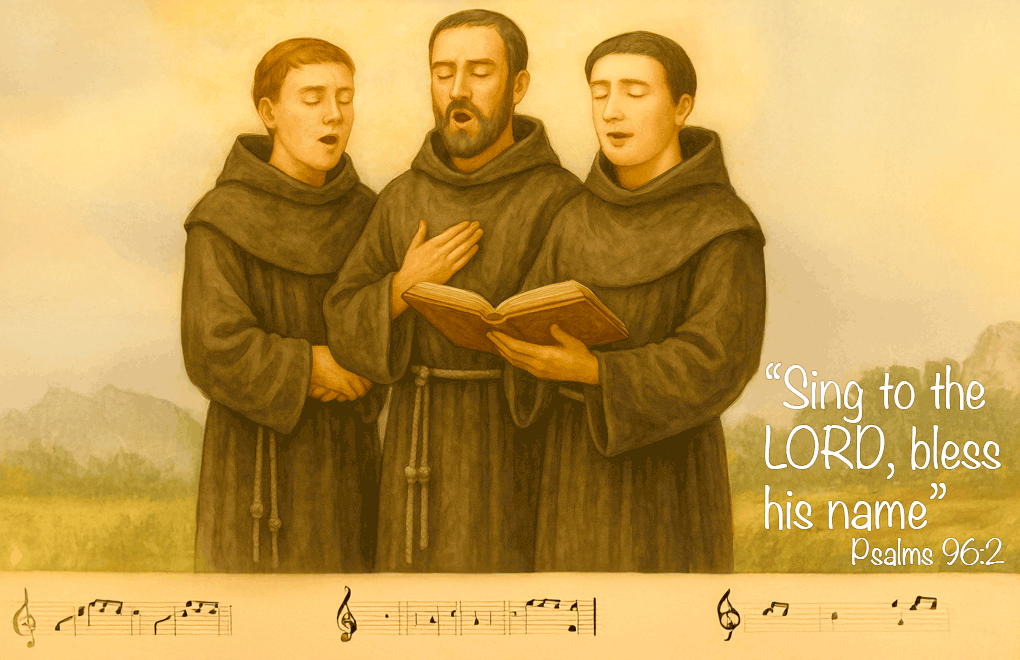
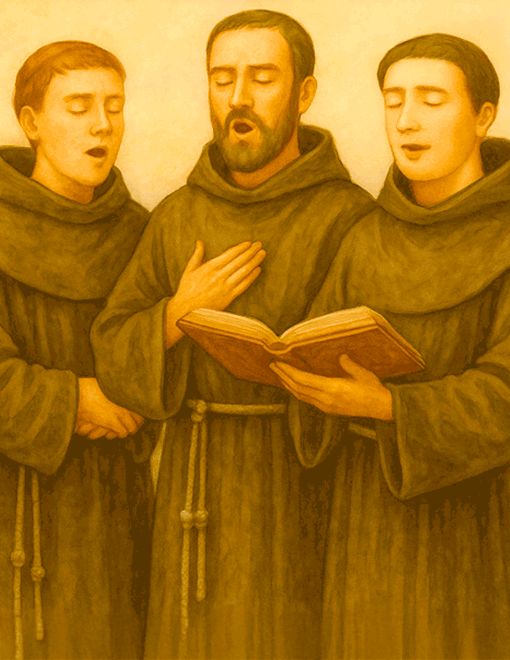
    Gregorian Mass Card

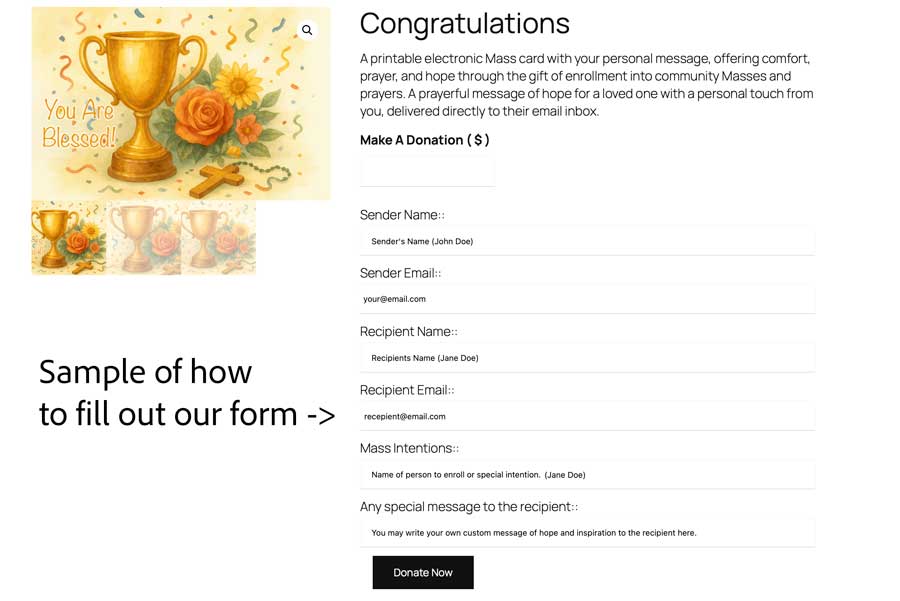
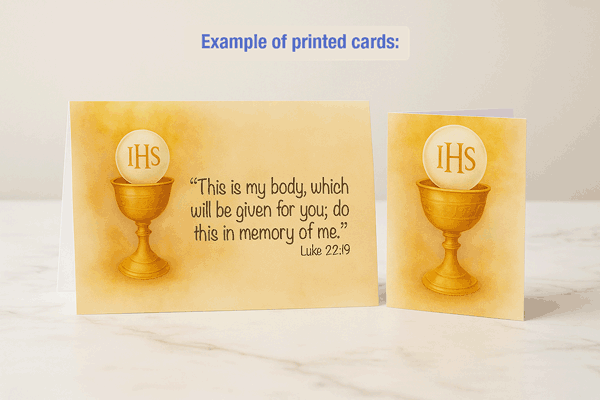
    We will send a printable card to the recipient’s email with instructions how to print the card at home. Each card has the image to the left with a personal message from you (optional below).  Our electronic enrollment cards offer comfort, prayer, and hope through the gift of a spiritual enrollment into our mission society which includes remembering your intentions in community Masses and prayers through our global partners and beneficiaries.

    Deliver a prayerful message of hope to a loved one today.

    Description

    Pope Gregory the Great was known as an advocate for the poor and promoter of missions, he also is credited with popularizing Gregorian Chant.

    Send a meaningful Mass Card Enrollment directly to a loved one. By enrolling them, you unite their name with the prayers and community Masses offered by our partner religious organizations around the world. This special gift supports Catholic mission work around the world. If you do not know your loved one’s email we suggest you send the card to yourself and deliver it by mail or in person.

    Your gift supports the Catholic Church’s international ministries and will be used to sustain clergy and provide vital aid such as: food, clean water, health care, and education for those most in need. Our mission society partners with communities like the Franciscans, Lasallians, Jesuits, and other Catholic organizations world-wide. We don’t ask you for a specific donation; we ask only that you give the most generous amount in your heart today. Every offering is a blessing to those in need who seek Christ’s mercy. May God bless you for supporting our global missions.
         

  • Catholic Holy Days of Obligation

    The Church invites her children to live according to the rhythm of grace marked by the liturgical year. Each Sunday is a holy day in itself, a day set apart for worship and rest. Alongside these Sundays, the Church names specific feast days as Holy Days of Obligation. On these days, the faithful are called to gather for the Eucharist and to pause from ordinary routines. We give time back to God, recognizing His presence in our lives and allowing His grace to renew us.

    These special days highlight central truths of the faith. They recall the Incarnation, the life and glory of Christ, the holiness of Mary, and the communion of the saints. Each feast teaches something essential about salvation and what it means to belong to God. To keep them holy is to remember who we are as His people and what we are called to become.

    A Holy Day of Obligation is a feast day on which Catholics are asked to attend Mass. The Church gives this instruction not as a rule but as a gift. The Eucharist is the center of Christian life. By gathering on these days, we remember that faith is not private but shared. We stand together before God in gratitude for the mysteries of our salvation.

    In the United States, the Holy Days of Obligation are:

    • January 1: Solemnity of Mary, Mother of God – The year begins under the protection of Mary, who is honored as the Mother of God.
    • Thursday of the Sixth Week of Easter: Ascension of the Lord – In many dioceses, this feast is celebrated on the following Sunday. We remember Christ’s return to the Father and our call to eternal life.
    • August 15: Assumption of the Blessed Virgin Mary – Mary is taken body and soul into heaven, showing us the destiny God desires for all who believe.
    • November 1: All Saints’ Day – We give thanks for the holy men and women who now live in God’s presence and intercede for the Church.
    • December 8: Immaculate Conception of the Blessed Virgin Mary – This is the patronal feast of the United States. It celebrates Mary’s preservation from original sin by God’s grace.
    • December 25: The Nativity of Our Lord Jesus Christ – The birth of our Savior, the Word made flesh, who came to dwell among us.

    When January 1, August 15, or November 1 fall on a Saturday or Monday, the bishops of the United States lift the obligation to attend Mass that year. The feasts of the Immaculate Conception and Christmas always remain obligatory, as they are central to our faith.

    To keep these days holy, we begin by participating in the Eucharist. This is the heart of every feast. The Church also encourages quiet prayer, reflection on the mystery being celebrated, and acts of charity. When we pray and serve, these days become moments of grace for the world around us.

    Each Holy Day of Obligation reminds us that worship and service belong together. At the altar, we meet Christ who gives Himself for us. In daily life, we meet Him again in the poor, the sick, and the forgotten. Acts of charity allow the grace of the Eucharist to bear fruit in love.

    At CatholicMasses.org, almsgiving supports Catholic missions that carry this love to those in need. If you are homebound or unable to attend Mass in person, you are invited to join a Virtual Mass online. Offerings made here support schools run by religious sisters, food programs for children, health care for the sick, and the preaching of the Gospel across the world. In this way, every act of participation joins spiritual devotion with real works of mercy, uniting the faithful everywhere in one Body of Christ.

  • Language During Mass

    Bible Differences Between Countries and Cultures

    Many Catholics have noticed that Mass in Canada sounds slightly different from Mass in the United States. The prayers and readings follow the same rhythm, yet familiar verses can sound a little different. A line from the Psalms may use one word in Canada and another in the United States. These differences often raise a question: Why does the same Mass sound different across borders?

    The answer lies in translation. The Liturgy of the Word depends on an approved translation of Scripture, called the lectionary. Each bishops’ conference is responsible for preparing and approving this translation for use in its territory. In English-speaking countries, this means that the Canadian Conference of Catholic Bishops (CCCB) and the United States Conference of Catholic Bishops (USCCB) each oversee their own version, with final approval from the Holy See.

    Canada’s lectionary is based on the New Revised Standard Version, Catholic Edition (NRSV-CE). The United States uses the New American Bible, including its updated Revised Edition (NABRE). Both versions were developed with deep respect for Scripture and approved through the same process. While the language may sound slightly different, both proclaim the same Word of God.

    The Church has always embraced different languages and expressions of faith. From the first Pentecost, when the Holy Spirit enabled people to hear the Gospel in their own tongue, the Church has known that one truth can be spoken in many voices. The early Christians prayed in Greek, Latin, and other local languages. Today, the Mass continues to reflect that diversity.

    English itself varies from place to place. The English spoken in Toronto carries a different rhythm than the English of Chicago or New York. The same happens in Scripture. One translation might read, “The Lord said to his servant,” while another says, “The Lord spoke to his servant.” A psalm verse might say, “Happy are those who trust in the Lord,” while another reads, “Blessed are they who put their trust in the Lord.” The phrasing changes, but the meaning remains the same.

    Consider the words of Isaiah. In the American lectionary we hear, “So shall my word be that goes forth from my mouth; it shall not return to me void.” In the Canadian lectionary the same passage reads, “So shall my word be that goes out from my mouth; it shall not return to me empty.” The words “void” and “empty” differ slightly in sound, yet both proclaim the same truth: God’s Word fulfills its purpose and never fails.

    The Evolution of the U.S. Lectionary

    In the United States, the process of refining the biblical text has unfolded slowly and carefully. The New American Bible (NAB) was first published in 1970. It reflected the Church’s desire, after the Second Vatican Council, to make Scripture accessible in the language people spoke every day. Over time, scholars discovered new ancient manuscripts and learned more about the languages of the Bible. As the English language continued to evolve, the Church revised the text so that it could be understood clearly when proclaimed aloud.

    In 2011, the New American Bible, Revised Edition (NABRE) was released. It offered more precise translations and closer attention to the biblical sources. This effort was part of a broader renewal that also touched the language of the Mass itself. That same year, a new English translation of the Roman Missal was introduced.

    One example appears in the words before Communion. For many years Catholics said, “Lord, I am not worthy to receive you, but only say the word and I shall be healed.” The revised text now says, “Lord, I am not worthy that you should enter under my roof, but only say the word and my soul shall be healed.” The new wording restores a vivid image from the Gospel (Matthew 8:8), where the centurion humbly tells Jesus that his home is unworthy of His presence. The change connects the prayer at Mass directly to Scripture and deepens its meaning.

    The work of translating Scripture is deliberate. The Church values accuracy more than speed. Every translation passes through study, review, and approval by the Vatican’s Dicastery for Divine Worship. This process ensures that the faith expressed in different regions remains one in truth and meaning.

    In late 2024, the U.S. bishops approved a new lectionary that harmonizes the readings at Mass with the NABRE. This updated version will help American Catholics hear the Scriptures in clear and faithful language suited for public proclamation.

    Unity Through Diversity

    Each national bishops’ conference carries the responsibility of preparing a translation that serves its people well. The bishops understand how language and culture shape how Scripture is heard. Rome’s approval confirms that every translation remains faithful to the same apostolic teaching.

    An American visiting Canada may notice a few differences in phrasing, yet both countries proclaim the same Word under the same Church authority. Across the world, the Eucharist is celebrated in many languages. The readings in Kenya, Ireland, or the Philippines sound different, yet the message is one.

    The Church’s unity does not depend on identical words. It rests on communion in faith, sacraments, and truth. From the early Church to today, Catholics have understood that diversity in language enriches the universal mission of the Gospel. The same Christ is proclaimed, the same altar is shared, and the same faith is professed.

    The Church speaks in many tongues but with one heart. Each translation of Scripture reflects the beauty of God’s Word through a different voice. The meaning does not change; it shines in many colors like light through stained glass. Whether the readings are heard in English, French, or Swahili, the Word remains the same: living, faithful, and full of grace.

    Bread of Life

    We will send a printable card to the recipient’s email with instructions how to print the card at home. Each card has the image to the left with a personal message from you (optional below).  Our electronic enrollment cards offer comfort, prayer, and hope through the gift of a spiritual enrollment into our mission society which includes remembering your intentions in community Masses and prayers through our global partners and beneficiaries.

    Deliver a prayerful message of hope to a loved one today.

    Description

    Send a meaningful Mass Card Enrollment directly to a loved one. By enrolling them, you unite their name with the prayers and community Masses offered by our partner religious organizations around the world. This special gift supports Catholic mission work around the world. If you do not know your loved one’s email we suggest you send the card to yourself and deliver it by mail or in person.

    Your gift supports the Catholic Church’s international ministries and will be used to sustain clergy and provide vital aid such as: food, clean water, health care, and education for those most in need. Our mission society partners with communities like the Franciscans, Lasallians, Jesuits, and other Catholic organizations world-wide. We don’t ask you for a specific donation; we ask only that you give the most generous amount in your heart today. Every offering is a blessing to those in need who seek Christ’s mercy. May God bless you for supporting our global missions.
  • Attendance at Mass

    From the earliest days of the Church, Christians gathered in community to celebrate the Resurrection of the Lord. We call this celebration the Eucharist, or the Mass. “The Sunday celebration of the Lord’s Day and his Eucharist is at the heart of the Church’s life” (CCC 2177). It is the central act of our faith, where we give thanks to God for the gift of salvation. At Mass, we listen to the Word of God, we lift up our prayers, and we receive Jesus Christ in the Blessed Sacrament. The Church teaches that this sacred celebration is the heart of Christian life and that it unites us with Christ and with one another.

    Catholics are asked to attend Mass every Sunday and on holy days of obligation. When we gather as a community of believers, we remember who we are and why we are gathered together. God calls us into communion, and the Mass strengthens that communion.

    The Church teaches that the Mass is a re-presentation (that is, a making-present again) of the sacrifice of Christ on the Cross. Jesus offered Himself once for all on Calvary (Hebrews 10:10). That sacrifice does not repeat, and it does not need to. But in the Eucharist, the same sacrifice is made present to us sacramentally. Time does not divide it. God allows the one saving act of Christ to reach every generation through the liturgy, and in particular receiving communion.

    The Church also teaches with mercy. She knows there are times when a person cannot attend Mass. Illness, frailty, or serious family duties can prevent someone from attending Mass in person. In those moments, it is right to remain at home and to pray. This is not a failure. It is an act of humility and care for others.

    The Church encourages those who stay home to read the Scripture readings of the day, to pray quietly, or to unite their hearts to the Eucharist being offered throughout the world. Many people now find comfort in participating through televised or online Masses. During the pandemic, this practice helped many of the faithful remain close to the Church. This website in particular helped bring Mass to thousands of faithful during that time. Watching Mass online cannot fully replace being physically present, yet it can strengthen faith and bring peace to those who cannot attend. The readings, homily, and prayers deliver God’s Word in every home. Those who join online way can make a spiritual communion, asking Jesus to enter their hearts with the same love He gives in the Eucharist.

    The Church is one family. When we gather for Mass, we pray for those who cannot be with us. Those who are sick or homebound can offer their daily sufferings, their hopes, and their prayers for others. Through this exchange of love, the whole Body of Christ remains united.

    The grace we receive in the Eucharist should overflow into our daily lives. Every act of kindness, every prayer for someone in need, every small gift of charity carries that grace into the world. Through CatholicMasses.org, the faithful can extend the spirit of the Mass by supporting missions that feed the hungry, educate children, and care for the poor. In this way, even those who watch from home take part in the living mission of the Church.

    Saint Thomas Aquinas taught that charity is the crown of all virtues. It gives meaning to everything we do. When we love with sincerity, when we pray with faith, and when we serve others, we live the mystery of the Eucharist. Whether we are in the church pews or in our homes, Christ calls us into the same communion of love.

    General Donation

    Your tax-deductible donation today will support our Catholic Mission Society and global outreach to the poor. Thank you for being generous to those in need. May God bless you for your kindness.


    Category:

    Tags:
  • Daily Catholic Reflection – October 3, 2025

    Today’s Catholic Reflection

    In these passages, we are reminded of the profound importance of obedience and humility in our relationship with God. The people of Judah and Jerusalem, despite being led by God out of Egypt and into a land of abundance, allowed themselves to be led astray by their own desires and false gods. This disobedience brought them shame and suffering, a poignant reminder that straying from God's path can lead us into darkness. The Psalmist's plea for deliverance, for the glory of God's name, underscores our total dependence on God's mercy and the transformative power of His forgiveness.

    In the Gospel, Jesus warns the towns of Chorazin and Bethsaida of the consequences of their unrepentance. Despite witnessing the mighty deeds of Jesus, they refused to turn from their ways and repent. This serves as a stark reminder for us today. We are called to listen to the voice of God in our lives, to turn from our sinful ways and seek His mercy. To reject God's message is to reject God Himself. Thus, let us strive to keep our hearts open to God's voice, to live in obedience to His commandments, and to seek His mercy when we fall short. For in doing so, we honor the glory of His name and find our true path to peace and salvation.

    Last updated on October 3, 2025 at 12:29 PM

  • Daily Catholic News – October 3, 2025

    The faithful across the United States are welcomed to experience the sacred relics of St. Thérèse of Lisieux, as they begin a nationwide tour at the Basilica of St. Thérèse in Juneau, Alaska. This tour provides an opportunity for prayer and reflection, as many devotees seek the intercession of the “Little Flower.” The relics will travel to various locations, offering a chance for local communities to engage with the life and legacy of St. Thérèse through special Masses and novenas dedicated to her memory.

    In a troubling development, the U.S. Food and Drug Administration (FDA) has approved a new abortion pill aimed at expanding access to abortion services. Proponents of the medication assert that this move seeks to normalize abortion, raising significant concerns among Catholic leaders and pro-life advocates. They emphasize the need for a renewed commitment to the sanctity of life, cautioning against the potential societal implications of such measures.

    Amid ongoing conflict in Gaza, Bishop Zaidan has called for prayers for peace. He has urged the faithful to join in seeking an end to the devastating war that continues to affect countless lives. The Latin Patriarchate of Jerusalem and the Italian bishops are taking action by initiating a joint project to establish a hospital in Gaza, aiming to provide essential medical care to those in need during this crisis.

    The recent decision by Senator Dick Durbin to withdraw from receiving a Catholic award due to backlash over his pro-abortion stance has stirred significant discussion within the Church. This situation has been met with relief from bishops who expressed gratitude for his withdrawal, signaling a strong stance against political figures who do not align with the Church’s teachings on the sanctity of life.

    The United States Commission on International Religious Freedom (USCIRF) has called upon the international community to protect refugees fleeing persecution based on their faith. This statement highlights the urgent need for solidarity and support for those who are suffering from religious discrimination worldwide.

    In a recent letter, the U.S. bishops have urged the Federal Trade Commission (FTC) to take action against misleading claims regarding “gender-affirming care” for minors. They emphasize the ethical responsibilities involved in the treatment of youth and the need for transparency in healthcare decisions that significantly impact the lives of young people.

    Pope Leo XIV has consistently advocated for a culture of reconciliation to support migrants and displaced persons. His remarks resonate as the Church seeks to respond compassionately to the needs of those who find themselves uprooted from their homes due to conflict or persecution.

    In the United Kingdom, a British Catholic bishop has condemned the tragic attack on a Manchester synagogue that resulted in the deaths of two individuals during Yom Kippur. This act of violence has drawn widespread condemnation from various faith communities, emphasizing the shared commitment to peace and mutual respect among different religious groups.

    In a noteworthy partnership, the Girl Scouts and the Archdiocese of Cincinnati have announced a renewed collaboration following previous disputes over issues related to LGBTQ+ matters. This partnership aims to strengthen community ties and focus on shared values, fostering an environment where all young people can thrive.

    In Italy, St. Francis’ feast day has been reinstated as a national holiday, allowing the faithful to celebrate the patron saint of animals and ecology with greater recognition. This day serves as a reminder of St. Francis’ teachings on creation and the call to care for the environment.

    In Uruguay, Cardinal Sturla has voiced strong opposition to proposed euthanasia legislation, reaffirming the Church’s commitment to the sanctity of life. His stance aligns with ongoing discussions about the ethical implications of such laws and their impact on the most vulnerable.

    Catholic University in Erbil has celebrated its fifth graduating class, marking a significant milestone for the institution and the community it serves. This achievement reflects the resilience and dedication of students and faculty in a region facing numerous challenges.

    A recent court ruling in Colorado has denied Catholic preschools participation in a school choice program, which has raised concerns regarding religious freedom and the rights of parents to choose educational environments aligned with their values.

    In response to the potential threat of a government shutdown, various Catholic organizations have urged Congress to take action to prevent disruptions in vital services. Their calls echo the need for responsible governance that prioritizes the well-being of all citizens, particularly the most vulnerable.

    As the anniversary of Pope Francis’ encyclical “Fratelli Tutti” approaches, the president of the U.S. bishops has issued a pastoral reflection that encourages the faithful to embrace the encyclical’s message of fraternity and social friendship. This reflection serves as a call to action for Catholics to engage meaningfully in the world and to seek justice and peace.

    Pope Leo XIV has described the recent Gaza peace plan as a “realistic proposal,” inviting dialogue and collaboration to address the ongoing conflict in the region. His comments underscore the Church’s commitment to peace and reconciliation in areas of strife.

    The Church continues to navigate complex conversations surrounding issues of life, faith, and societal values. As discussions unfold, bishops and Church leaders remain committed to articulating the teachings of the Church while engaging respectfully with the broader societal context. Each of these developments reflects a commitment to living out the Gospel message in a world that is often fraught with challenges.

    In all these matters, the Church stands as a witness to the call for compassion, justice, and the dignity of every human life. The faithful are encouraged to pray, advocate for peace, and support initiatives that align with the teachings of Christ, fostering a spirit of love and understanding in the world.

    Last updated on October 3, 2025 at 12:29 PM

  • Daily Catholic Reflection – October 2, 2025

    Today’s Catholic Reflection

    In the reading from Nehemiah, we are reminded of the importance of the Word of God in shaping our lives and guiding our actions. The people of Israel gathered to listen to Ezra read the law of Moses, and their attentiveness and reverence reflect the profound respect and love they had for God's law. As they listened, they wept, moved by the words of the law and perhaps recognizing their own failings. Yet, they were told not to weep, but to rejoice, for understanding God's law is a cause for celebration, a source of strength and joy. This passage calls us to approach our faith with a similar attitude of reverence and joy, to immerse ourselves in the Word of God, and to allow it to shape our lives.

    The Gospel reading from Matthew further emphasizes the importance of humility in our spiritual journey. Jesus uses a child to illustrate the kind of humility we should strive for in our relationship with God. Children are open, trusting, and devoid of pretense, qualities that we should emulate in our faith. We are called to be humble, to receive God's Word with an open heart, and to approach our faith with the innocence and trust of a child. Just as the angels watch over the little ones, we are reminded that God watches over us, guiding us and protecting us on our spiritual journey. These readings remind us of the joy and strength that come from understanding and living according to God's Word, and the importance of humility and trust in our relationship with God.

    Last updated on October 2, 2025 at 7:41 AM

  • Daily Catholic News – October 2, 2025

    Spiritual Insights for Today:

    In a show of interfaith solidarity, a Catholic church in Utah has offered a Mass for the repose of the soul of the late LDS President, Russell M. Nelson. The 17th president of the Church of Jesus Christ of Latter-day Saints was remembered in a special service, highlighting the mutual respect and understanding between the two faith communities.

    In Colorado, a court has ruled against two Catholic preschools in a school choice program. The decision comes after a lengthy legal battle over the state government’s exclusion of the schools from its program. This ruling has sparked concern among Catholic education advocates who argue for the importance of religious diversity in educational options.

    Catholic organizations are urging Congress to swiftly resolve the ongoing U.S. government shutdown. The shutdown has had wide-ranging impacts, affecting many aspects of daily life and public services. Catholic groups have been vocal in their calls for a resolution, highlighting the need for government to serve its people effectively.

    The president of the U.S. bishops has issued a pastoral reflection on the anniversary of Fratelli Tutti. Archbishop Timothy Broglio’s reflection comes as the Catholic community marks one year since the release of Pope Francis’ encyclical, which focused on fraternity and social friendship.

    Finally, Pope Leo XIV has commented on Trump’s Gaza peace plan, describing it as a ‘realistic proposal’. The Pope’s remarks were made during an impromptu Q&A with journalists, demonstrating his engagement with global political issues and the Church’s ongoing commitment to peace and justice.

    Last updated on October 2, 2025 at 7:41 AM

  • Daily Catholic Reflection – October 1, 2025

    Today’s Catholic Reflection

    In the readings today, we find two great themes of our faith: the longing for home and the call to discipleship. Nehemiah's heart aches for his homeland, the city of his ancestors, now in ruins. He is in a foreign land, serving a foreign king, but his heart is in Jerusalem. This longing is echoed in the Psalm, where the Israelites weep in Babylon, yearning for Zion. They refuse to forget their homeland, even in the face of their captors' mockery. This longing for home is a longing we all share – not just for our earthly homes, but for our heavenly home with God. We are pilgrims in this world, and our hearts should always be oriented towards our true home with the Father.

    The Gospel reading presents us with the radical call of discipleship. Jesus invites us to follow Him, but warns us that it will not be easy. To follow Christ means to leave behind our old lives, our old attachments, and to make Him our first priority. It is a call to radical commitment, to put our hand to the plow and not look back. This is a difficult call, but it is the path to our true home. Like Nehemiah, we may be in a foreign land, but our hearts should be in the Kingdom of God. Like the disciples, we may have to leave behind what is familiar and comfortable, but in following Christ, we find our true home.

    Last updated on October 1, 2025 at 9:14 AM

  • Daily Catholic News – October 1, 2025

    Daily Catholic News:

    In today’s Catholic news, U.S. Senator Dick Durbin, D-Illinois, has decided to decline an award from the Archdiocese of Chicago. This decision comes after a global backlash over his pro-abortion views. The Senator’s stance on abortion has been a contentious issue within the Catholic community, leading to widespread criticism and ultimately, his decision to refuse the award.

    In other news, Cardinal Robert McElroy is urging solidarity with immigrants who lack legal status. The Cardinal, known for his compassionate views, delivered his first homily as the shepherd of the Archdiocese of Washington, D.C., at the Basilica of the National Shrine of the Immaculate Conception. His call for empathy and understanding towards immigrants is a reflection of the Church’s teachings on the dignity of all human beings.

    Pope Leo XIV has expressed concern over U.S. Secretary of War Pete Hegseth’s talk of war. The Pope described Hegseth’s rhetoric as ‘worrying’, highlighting the Catholic Church’s longstanding commitment to peace and diplomacy. The Pope’s comments underscore the Church’s position against war and its devastating effects on humanity.

    Meanwhile, Cardinal Pierbattista Pizzaballa has issued a strong message to catechists. He emphasized that if their faith isn’t meaningful to them, it won’t be to their students. The Cardinal’s statement underscores the importance of personal conviction in the teaching and transmission of faith.

    Finally, Brooklyn Bishop Robert Brennan is calling on the faithful to lobby against New York’s assisted suicide legislation. The Bishop’s call to action reflects the Catholic Church’s firm stance on the sanctity of life, opposing any form of assisted suicide. This move is part of the Church’s broader efforts to uphold the dignity of life at all stages.

    Last updated on October 1, 2025 at 9:14 AM